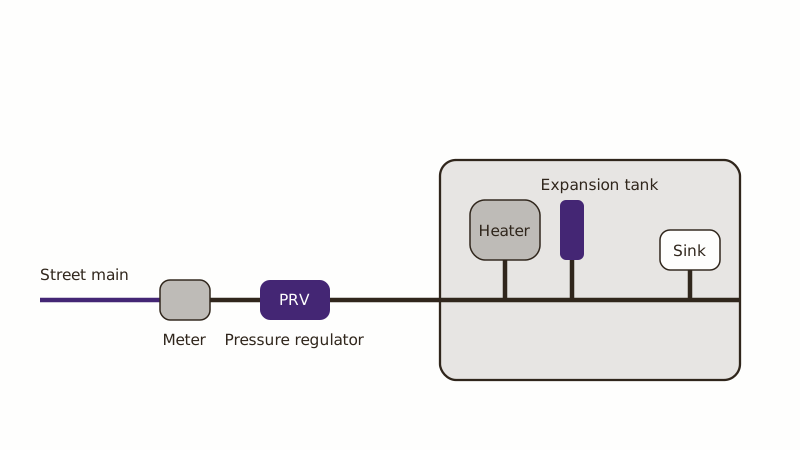
Too much pressure is the opposite of the complaint most owners have, and it does quiet harm: it strains supply hoses, wears out faucet cartridges and makes a water heater work against itself. The remedy is a pressure reducing valve, called a PRV by trades, installed on the line coming in. It fits within our water pressure pages, in the part about pressure that is too strong rather than too weak.
What job does a PRV do for the whole house?
Imagine a stubby brass dome on the incoming pipe with a bolt poking out of its top. Inside, a spring pushes against a diaphragm and throttles the flow, so the house gets a steadier and lower pressure than the street supplies. Without it, house pressure simply mirrors the supply, which can swing with the hour and the neighborhood, and peaks when everyone is asleep.
Think of it as a pressure gate between the utility's pipe and yours. Installers commonly set one well under the legal limit, though your house and fixtures may call for a different figure, and the installer is the person to pick it.
Where does the California code draw the line?
At 80 psi of static pressure. California Plumbing Code 608.2 says that where the supply is stronger than that, an approved regulator fitted with a strainer must cut it to 80 or lower. Static pressure means the number you get with all taps closed, the moment it is at its highest.
The number is a ceiling, not a goal. A house reading 78 psi is legal yet may still feel harsh at the shower, and a reading above 80 calls for installing a PRV or replacing a dead one. Readings in the 60s accompanied by odd behavior suggest another cause, so read what makes pressure sag.
Can I take a reading without a plumber?
A hose-thread gauge from a hardware store threads onto an exterior spigot or the washing machine hookup. Confirm nothing else is drawing water, open the spigot fully, and read the needle. Repeat around midnight or at dawn, because pressure from the main often climbs when few people are using water.
A needle past 80 is a cue to phone a plumber, not to grab a wrench. A reading in the 40 to 70 band while fixtures still misbehave sends you after other culprits, clogged screens, a half-open valve or rusted pipe; fixing weak pressure around the house covers that hunt. Write down each reading with the date and time, because that record helps whoever diagnoses the system later.
How would I know a PRV had gone bad?
Look for pipes that hammer when a tap shuts, toilets that top themselves up with a hiss, faucets that spit or weep, bulging hoses, a heater relief valve that dribbles and leaks that keep appearing at new spots. A PRV can also fail closed, and then the entire house feels weak.
Hammering has other possible origins, as the page on water hammer explains. Failure is often gradual: the spring weakens, pressure climbs over months, and the first sign is a leak at a fitting. Where an old regulator exists, treat strange symptoms as a cue to put the gauge on. EPA figures on household leaks, which run into thousands of gallons yearly on average, make a slow drip worth tracking down.
Where is the PRV, and may I turn the bolt?
Look on the main line just past the shutoff where water enters the building: a garage wall, a side yard or a box by the meter. The look is distinctive, a squat brass bell. Finding one is the subject of locating the regulator.
Many models adjust with a locknut and a screw, tightening for more pressure and loosening for less, while you watch a gauge. It is easy to overshoot, so read adjusting the valve first and note the starting reading. Swapping out a failed unit is plumber's work, covered in replacing the regulator, since it means shutting the main and cutting into live plumbing.
What does a PRV mean for the water heater?
A lot. Once a PRV is in, the plumbing is sealed off from the street, so water that expands as the heater warms it has no escape path and the pressure jumps. A small expansion tank by the heater soaks up the swing and is often needed. Have the installer look for one and match it to your tank.
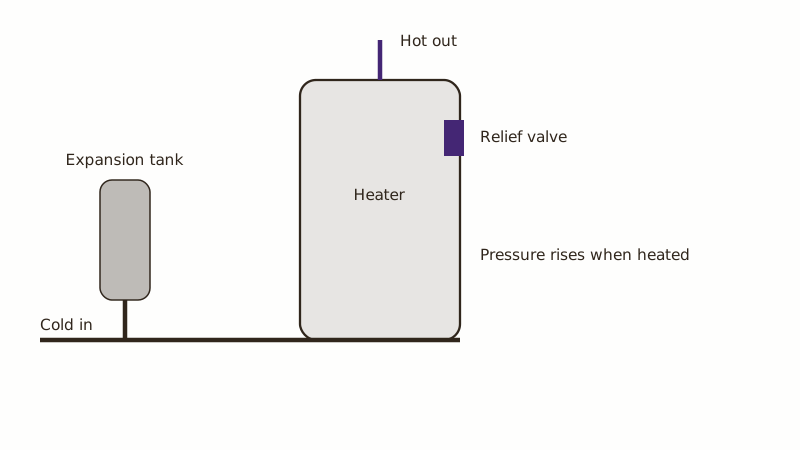
If your heater's relief valve keeps dripping, the culprit may be pressure rather than the valve itself, and fixing the pressure stops the drip. The component is described under expansion tank replacement. Bundle the checks into one visit.
What is installed, and what shapes the price?
Work starts with closing the main, then the PRV and strainer are cut in, set and tested, and a gauge or thermal expansion tank is frequently added. Cost swings with how reachable the pipe is, its material, whether it is buried, whether a new union or shutoff is needed, and permit rules.
We have no verified Ontario figure to print; regulator installation cost discusses the drivers. Ontario Building, (909) 395-2023, can say whether a replacement needs a permit. The price that applies is whatever the plumber commits to in writing after viewing the line.
Common questions
Is there probably one on my house already?
Possibly, though not every home has one and plenty are old and tired. Look near the entry for the brass bell, and take a reading. An unsafe number with a regulator in place means it is worn or set too high. Supply pressure differs around the city, so measure at your own address.
What can high pressure ruin?
Almost everything wet. Supply hoses split, toilet fill valves fail, faucet cartridges wear fast, appliance valves chatter and water heaters strain. Cutting pressure is generally cheaper than repairing the parts it keeps killing. Early repairs to those items are often the first hint that pressure is the underlying problem.
How long does swapping a regulator take?
Typically part of a day, shaped mostly by access and by whether an expansion tank or fresh shutoff goes in alongside. Water is off while the work happens. We do not set times; the plumber will estimate after viewing the setup and may retest pressure a day or two later.
Should I be around when it happens?
Ideally yes: at the outset to show where the main shutoff is, and at the end to read the new pressure and sign off. A short outage is part of it. If you are away, leave a contact so the plumber has access to the entry point and the heater.