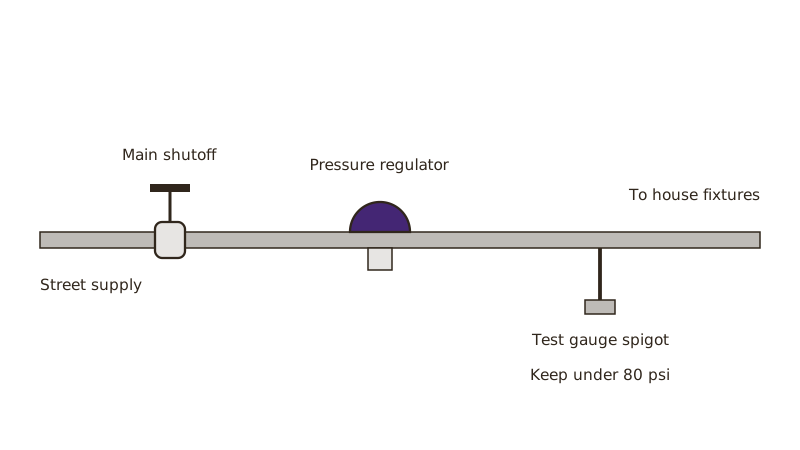
Budget roughly $270 to $650 for a regulator swap done by a plumber, going by one 2026 national guide. Labor is the biggest slice, and the valve itself is small change. Where the old valve sits decides which end you land on. If pressure is what bothers you, the bill is secondary: our low water pressure page explains how one tired valve can make a house too forceful or too feeble. Want a number for your address? Send a quote request and say where the valve sits.
What does a new pressure regulator usually cost installed?
One 2026 national guide, from Plumbing Tips Today, gives a professional replacement as $350 to $650 on average, though its own itemized table starts lower at $270. Its parts: valve $50 to $150, labor $200 to $450, fittings and supplies $20 to $50. Read it as a guide, not a price list.
| Item | Typical range |
|---|---|
| Regulator (pressure reducing valve) | $50 to $150 |
| Labor, about one to three hours | $200 to $450 |
| Fittings, tape, solder, shutoffs | $20 to $50 |
| Evening or weekend premium | about $100 to $300 |
| Permit, in places that require one | about $50 to $150 |
The same source says a skilled plumber usually needs one to three hours. Brand, warranty and an itemized split between labor and materials are worth asking about.
Why would one quote come in far above another?
Four things move the number: access, the pipe, the valve size and the clock. A valve within easy reach is quick work. One wedged under the floor or buried in a wall box takes longer, and the longer visit is what you pay for. Copper means soldering and takes longer, PEX tends to go faster, and corroded galvanized steel can eat up an afternoon.
The clock matters as well. The guide treats evening and weekend calls as roughly $100 to $300 extra. If water is not pouring out and the main shutoff works, a daytime slot is cheaper. A seized main shutoff is a common snag and often a surprise. It can double a visit, so have the plumber try it early.
Does installing a regulator require a permit?
That varies by city and by scope, and the Building office is the one to settle it. Where a permit applies, the national guide puts it at about $50 to $150. Ontario's Building counter at City Hall takes questions on (909) 395-2023, and nearby cities each have their own office.
California makes a contractor license mandatory from $1,000 in work and parts combined, and at any amount when a permit is needed. A plain regulator swap often comes in under that line. Even then, the quote should say who handles a permit or inspection, and if that fee sits inside the total.
Can a failing regulator be repaired rather than replaced?
Sometimes. Rebuild kits are inexpensive, so a repair estimate may undercut a replacement. Yet a regulator that is old, noisy or weeping at the body is usually replaced, because opening the line costs the same labor whichever part goes back in, and a fresh valve resets the clock on a part that was already worn.
Let age and symptoms decide. Pressure that creeps up overnight, pipes that knock, or a static reading above 80 psi all point to a failed valve. The 80 psi ceiling appears in the California Plumbing Code at 608.2. Get both a repair and a replacement price, and ask what warranty covers each. How the swap goes, step by step, is in replacing a pressure regulator.
What other items show up on a regulator quote?
Expect two. First, an expansion tank. Closing the system with a regulator leaves heated water nowhere to expand, so a tank is often needed. It should be a separate line. Second, a test gauge, an inexpensive part worth adding if the house has none.
Ask for static pressure to be read before and after, and written down. Fittings near a softener or a water heater may need to move, which adds time. For how the tank line works, see expansion tank replacement.
How can you tell the regulator is the culprit?
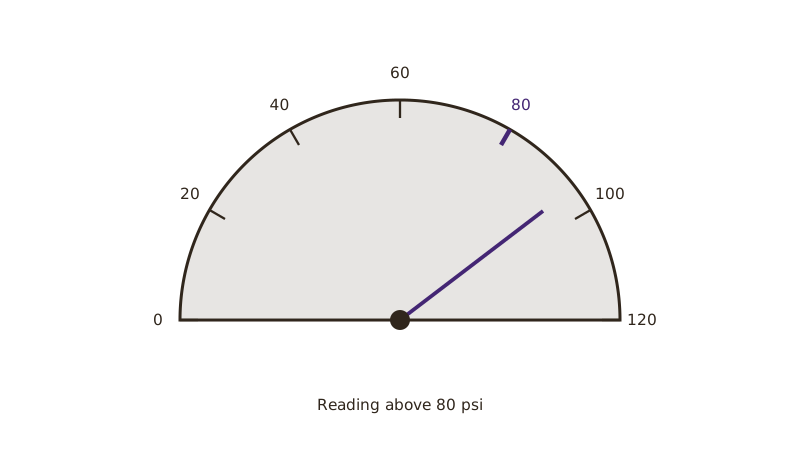
Typical clues: pipes that thump, a relief valve that seeps, spitting faucets, or pressure that rises overnight. A reading above 80 psi on a test gauge points squarely at the regulator, although a clogged one can also starve the house of water, so low flow is worth testing too.
Debris and scale are common clogs here. The city's water report for 2025 shows average hardness from 91 to 177 ppm depending on the supply, which means scale can differ block to block. A plumber checking pressure looks at the regulator, the shutoff and the supply as one set. If low flow is the only complaint, read about sudden low pressure first.
What belongs on a regulator quote?
It should name the valve and its size, split labor from parts, say if a permit is included, list pressure before and after, and mention any tank or shutoff replacement. A warranty on the part and on the labor belongs in writing.
Everything above is a national guide. What counts is the number in writing from the plumber who has seen your valve. Does the trip fee count toward the repair? What changes if the pipe is corroded? Who removes the old valve? Put all three to the plumber. Read two quotes line against line instead of comparing totals. Trip fees and hourly rates are explained at what plumbers cost.
Common questions
How many hours will a regulator swap take?
The national guide allows one to three hours of work. An open spot with sound shutoffs is the quick case. Corrosion, tight crawl spaces or a missing main shutoff slow it down. Once someone has laid eyes on the valve, the estimate firms up.
Could I fit one myself and skip the labor?
A handy person can, but labor is the savings and also the risk. You will be cutting into supply pipe and rejoining it, and one bad joint can flood a room. Ask the Building office about permit rules first, and test pressure before and after.
What pressure counts as too much?
That 80 psi cap is written in section 608.2 of the plumbing code. Above it, fixtures and supply lines wear faster. Screw an inexpensive gauge onto a spigot, close everything else, and read the dial. Over 80 usually means a regulator job, and a plumber should also check for thermal expansion.
Is a pressure reducing valve a different part?
No. In a house they refer to one dome-shaped brass valve, generally found near where the supply line enters. Plumbers say PRV for short. Either word is fine on a quote request, since the plumber identifies the model on site.
Will I need an expansion tank too?
Often, but it is a judgment call. A closed system leaves heated water no room to expand, and a small tank at the heater is the common remedy. The plumber should say if yours needs one and price it as its own line.