Chino Hills was mostly built after 1980, on ground with real slope, and the city itself runs the water and sewer service. Those three facts drive the local plumbing story: pressure that swings with elevation, two older canyon pockets with aging pipe, and hillside lots where reaching the work is half the job. Nearby cities are summed up on the areas page; a visit request begins at the quote form.
Why does Chino Hills have mostly newer houses, and does that spare the plumbing?
Growth came fast. The city went from roughly 4,200 housing units in 1980 to about 16,300 in 1990 under the 1979 Chino Hills Specific Plan, so most houses date from the 1980s onward. Newer usually means fewer galvanized-steel headaches, but plumbing installed in the 1980s and 1990s has now aged enough for failures at fittings, valves and tanks.
Census estimates count 24,121 housing units (ACS 2024 1-year, margin of error 1,448) and a typical owner-occupied value of $890,200. Bigger homes can mean extra bathrooms, extra fixtures and longer pipe runs, which is where repiping and leak decisions get pricey.
Pinhole leaks in copper and tired supply fittings are the typical complaints at this age. The pieces on copper pinholes and repipe timing show whether you have a single bad spot or a trend.
Which parts of Chino Hills are older, and why is pressure flagged there?
The city's housing element places most pre-1970 housing in Los Serranos and the Sleepy Hollow area of Carbon Canyon, and it flags low water pressure in both. Live in either and you probably have an older house on an older line. Before assuming the cure is indoors, ask for a pressure test at an outside tap.
Aging neighborhoods can have galvanized supply pipe narrowed by mineral buildup, so weak flow often traces to a clogged-down pipe or a half-shut valve, not a utility fault. The document names no pipe material, so treat narrowing as a theory to test, not a finding. Reading a gauge takes minutes. Begin with help for low water pressure and why pressure drops.
If the old line is guilty, galvanized replacement shows what swapping it involves.
What does a steep lot do to plumbing in Chino Hills?
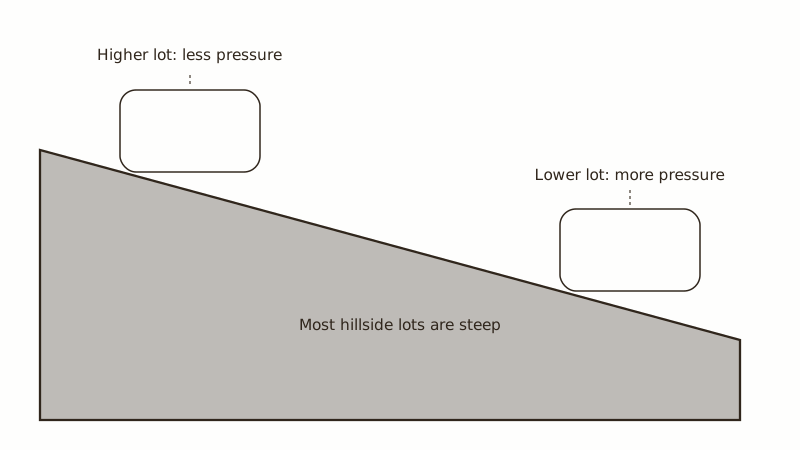
Most hillside parcels in the city have slopes above 25 percent, per the housing element. Slope matters in three ways: pressure climbs on low lots and sags on high ones, drains need workable fall toward the street or sewer lateral, and tools and trucks have to reach the job.
Too much pressure is the opposite problem. The 80 psi limit comes from section 608.2 of California's plumbing code, yet a house far downhill can exceed it once the regulator wears out. Warning signs include knocking pipes, a toilet that keeps refilling and a relief valve that weeps. See adjusting a regulator, and regulator replacement pricing if the unit has died.
Lots with stairs, retaining walls and narrow side yards also change the plan, so mention access when you ask about a visit.
What does permitting look like through Building and Safety?
The permit desk for plumbing is Building and Safety at 14000 City Center Drive, in City Hall, 909-364-2780. State rules demand a contractor license for permitted work, and for any project that hits $1,000 with parts counted. Heater swaps and gas piping are the typical permit items.
Ask whether the price already covers permit filing and an inspection visit, and who handles each. An inspector reviewing a replacement tank, whether in a garage or a hillside closet, checks strapping and venting, and heater replacement pricing covers common extras.
Gas odor overrides everything else. Everyone leaves first. From the curb, SoCalGas (1-800-427-2200) takes the report, and anyone endangered means 911 as well.
Who delivers water and sewer service to Chino Hills homes?
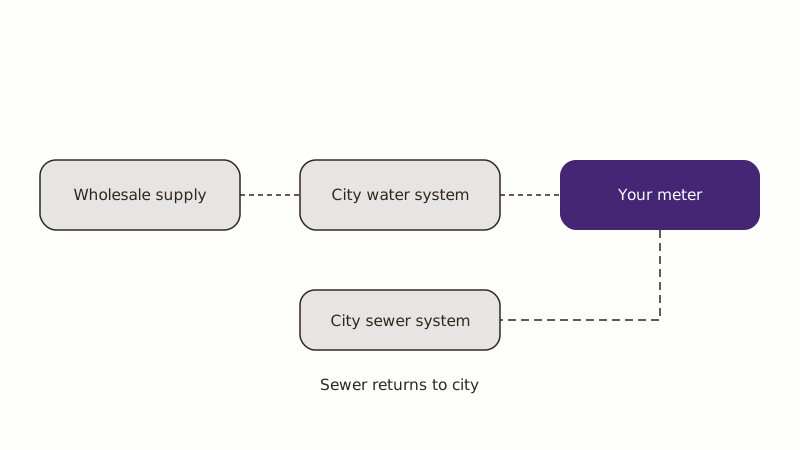
The City of Chino Hills provides water and sewer to its residents; Utility Billing answers at 909-364-2660. The city buys wholesale. About 64 percent of its water comes from the Water Facilities Authority plant, 17 percent from Monte Vista Water District wells, 12 percent from the city's own wells and 7 percent from the Chino Desalter Authority.
With a blended supply, no single hardness figure represents the city. The city's page lists none and this page cites no local report, so it quotes none. Utility Billing can send the report that fits your address. If crusty fixtures are the issue, begin with descaling hard water buildup.
SoCalGas lists Chino Hills among the cities it serves for natural gas.
Common questions
Why is pressure weak in Carbon Canyon or Los Serranos?
The city's housing element flags low pressure in both older areas. Usual suspects: aged galvanized pipe, a shutoff that was never fully reopened, or a dead regulator. Screwing a gauge onto a spigot lets a plumber separate a house-side problem from a street-side one, and the city utility speaks for the street.
What do plumbing jobs usually run in Chino Hills?
That hinges on the work, the reach and any permit, which rules out a single figure. Rely on a quote delivered in writing after an inspection, not on a figure given blind. Published guide ranges with sources are collected on the plumber cost page. Hillside access and the longer runs in bigger houses can add time.
Is a Chino Hills house too young to need repiping?
Often, but not always. Houses finished in the 1980s or 1990s are old enough for fittings, valves and supply lines to fail even without galvanized pipe. A lone leak is no reason to repipe. Leaks popping up at different spots are the warning sign, and a visit settles which case you have.
Can someone come look at my Chino Hills plumbing?
Submit the quote form whenever suits you, or ring weekdays between 9am and 5pm. Name your part of the city, describe the symptom and mention any running water. A local plumber stops by and writes the price down before touching anything. More services are listed on the main page.