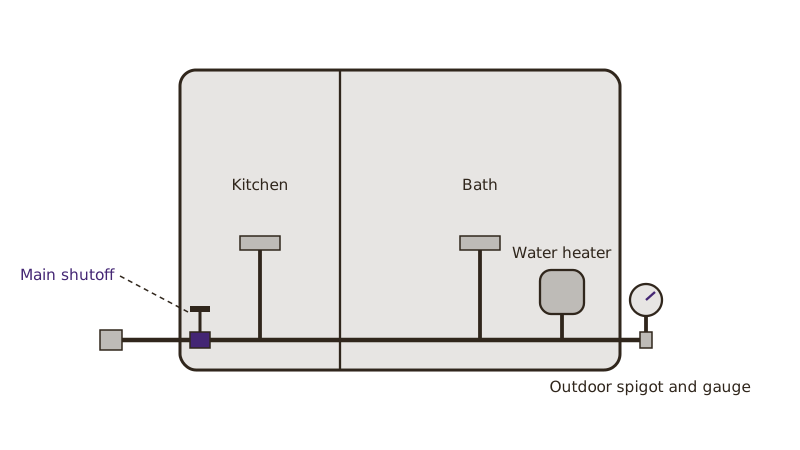
Three habits matter most. Find where the main shutoff sits. Keep static pressure no higher than 80 psi. Replace pipe that shows corrosion before it gives way. The rest is detail. This sits under the larger guide to plumbing for leaks and bursts, and if water is already escaping, go there first.
Bursts look sudden but have slow causes. Excess pressure wears fittings for years, copper thins from the inside, and an old galvanized line narrows until one day it splits. Below is what to look at, in the order that pays off most.
Where should I start, and what takes five minutes?
Find the main shutoff, close it, and reopen it once so you know the handle still works. Then read your pressure with a cheap gauge on an outdoor spigot. If the needle sits above 80 psi, a regulator probably needs attention. Those two checks take minutes and catch the most expensive problems.
A shutoff that is seized is the real hazard, because nobody finds out until the emergency. Stuck handles need a plumber, and swapping one before trouble beats doing it with water pouring. Write the shutoff location on a note and tell everyone in the house. If the gauge reading is high, how to adjust a regulator and why pressure drifts explain the valve, and the Rheem installation guide also advises a pressure-reducing valve above 80 psi.
Which of my pipes are the likely culprits?
Age and material predict most failures. Galvanized steel from older homes narrows and rusts inside. Copper develops pinholes. Polybutylene, the gray plastic installed in some mid-era homes, has a reputation for failing at fittings. Newer PEX and PVC fail mostly where joints were poorly made or where pipe is exposed to sun or impact.
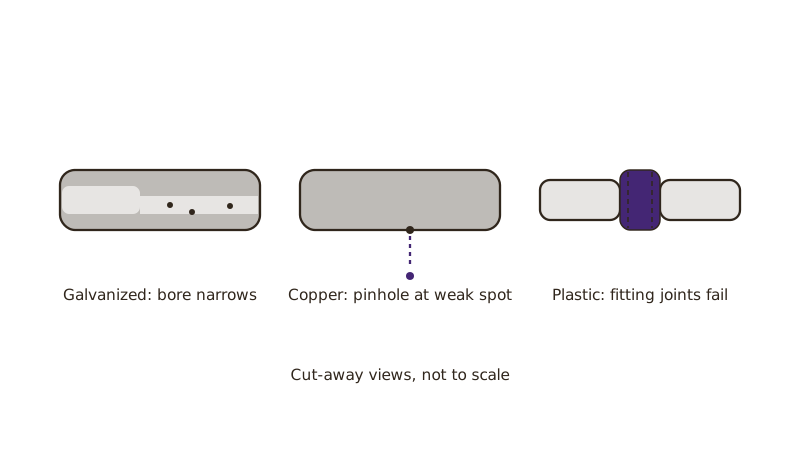
Around downtown Ontario and the Euclid Avenue historic area, the oldest plumbing may include clay drains and galvanized supply that outlived its design, though we have not verified materials for any given street. Postwar tract homes in Montclair and Chino may have copper. Ontario Ranch and The Preserve homes are newer and may use PEX, where the weak points are connections. Water chemistry plays a part: the city's 2025 report gives average hardness of 91 to 177 ppm depending on the source, and mineral-heavy water speeds scale on fittings and valves. To identify what you have, read about replacing galvanized lines, polybutylene replacement and copper pinholes.
What can I do every year to head off a burst?
Work down a short list. Feel for dampness or green crust on connections beneath sinks and behind toilets. Exercise every shutoff valve. Look for drips at the heater, flush its tank, check the relief valve outlet, and examine washer and dishwasher hoses. Swap anything cracked or bulging. Finish by watching the water meter, taps closed, for two minutes.
A dial that creeps while everything is off means a leak somewhere. The EPA estimates that a typical household leak wastes above 9,300 gallons in a year. Braided supply lines at washers and sinks burst often, so retire worn ones. Before a trip, shut the main or have someone check the house. Strange readings point to bills that climb with no visible cause.
Battery-powered leak sensors, the kind that chirp when they sit in water, cost little and are worth placing under the water heater, the kitchen sink and behind the washing machine, where a slow drip goes unseen for weeks. Some homeowners add an automatic shutoff valve on the main that closes when a sensor trips. That is a plumbing change, so have a plumber fit it. Garden hoses left attached through the year also strain the spigot, so disconnect them when not in use.
Does a pipe really burst from cold here, and what about heat or shaking?
Freezing is possible but uncommon in the Inland Empire. It happens on outdoor spigots, pipes in unheated garages and attics, and in mobile homes with exposed skirting. Pressure surges, shifting soil, earthquakes and tree roots are more common causes. Wrap exposed pipe, cover hose bibs on cold nights and leave drips on during a rare hard freeze.
Water hammer adds stress. A valve that slams shut sends a shock down the line, loosening joints over time; the banging pipes page explains it. Mobile homes have extra exposure, handled in protecting mobile home plumbing from cold. Earthquake risk argues for flexible connectors and a strapped water heater, and Ontario's Building office, (909) 395-2023, can say what needs a permit.
When is replacing pipe cheaper than patching it?
When the same pipe has leaked twice, when pinholes show up in more than one spot, or when the material is on the known-risk list. A patch buys time; fresh PEX or copper closes the loop. Planning early means less drywall and flooring to rebuild.
Have lines pressure-tested and visible runs inspected, then set the repair estimate beside a repipe estimate. Failure modes are broken down in why pipes split, and spotting a rupture after it happens is in confirming a burst. Already soaked? Read drying out after a burst. Other jobs we set up are on the home page.
Common questions
What would a checkup visit cover?
Expect a pressure reading at an outdoor spigot, a look at exposed supply lines and valves, the heater connections, signs of corrosion, and a test of the main shutoff. Some visits add a line pressure test or a camera view of the drain. The outcome is a list sorted into replace now and can wait.
What do I request from the plumber?
Request the recorded static pressure, a shutoff test, the pipe materials found, and a flag on anything close to failure. Get findings in writing with a price per fix. California wants a contractor license on permit work, and on anything that reaches $1,000.
Should someone be in the house?
Yes, because the meter, sink cabinets, heater and garage all need opening up, and water may go off briefly while valves are tested. Clear boxes and storage away from those spots beforehand so the plumber can work without moving your things.