The water meter settles the first question: is this a leak, or is it use? Close every tap, stop every appliance, write the reading down, then check again once a long lunch has gone by, about 120 minutes. If the digits have advanced, a leak is probable according to the EPA. If not, the extra water passed through taps and appliances. If you want repair help, see our leaks section.
How can I be sure it is a leak?
Nothing may run during the test; that includes the washing machine, the dishwasher and the icemaker. A tiny dial or triangle on some meters spins whenever water moves. If yours turns in a quiet house, the leak is somewhere beyond the meter, on your side.
Then shut the main valve that feeds the house and watch a second time. A dial that goes still puts the leak indoors. If it keeps turning, look to the stretch between meter and valve, often an outdoor or irrigation line. Write down both readings and times for the utility or plumber.
What are the most likely hidden sources?
Toilets top the list, since a worn flapper leaks silently into the bowl. After them come irrigation lines, a hose bib dripping inside a wall, a weeping water heater connection, a pool or fountain feed, and a cracked pipe in a slab or wall. The EPA reports about nine percent of homes lose fifty or more gallons daily.
The same source says fixing easy leaks can trim about ten percent from a bill. Work outward from the toilets to outdoor lines, then cabinets and the water heater. The usual culprit is explained in toilets that keep running.
How do I test a toilet for a silent leak?
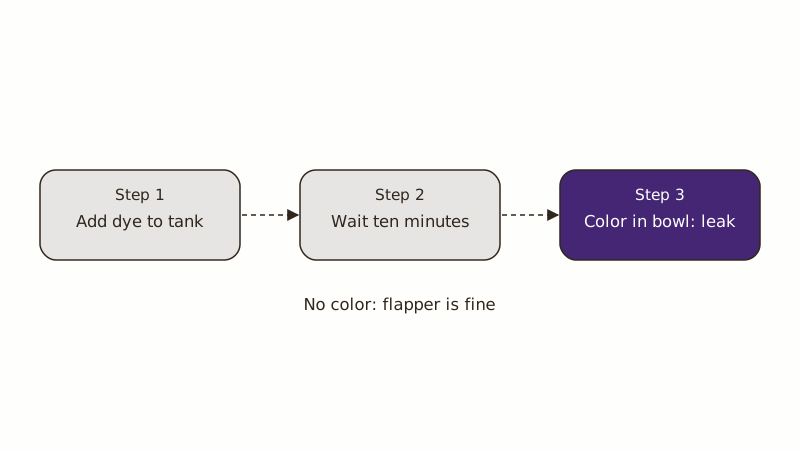
Mix food coloring into the tank, then ignore the toilet for ten minutes. A bowl that picks up the same color has a leaking flapper; flush at once so nothing stains. The EPA recommends the test, and it needs no tools.
A leak like this can run for weeks in silence. Swapping a flapper is an inexpensive job many owners do alone, and a faulty fill valve costs about the same to replace. Unsure which part failed? Leave it to the plumber at a visit.
Could it be outdoors, in irrigation or a hose line?
Yes, and often. Walk the yard looking for soggy ground, a patch greener than the rest, or a sprinkler head still wet after the system shuts off. Repeat the meter check with irrigation turned off. A buried line can leak for a long time with nothing showing at the surface.
If the meter turns with the house valve closed, the leak is outside the house. A plumber can isolate the run, and leak detection equipment can pinpoint it without digging up the whole yard.
When is it a slab or wall leak?
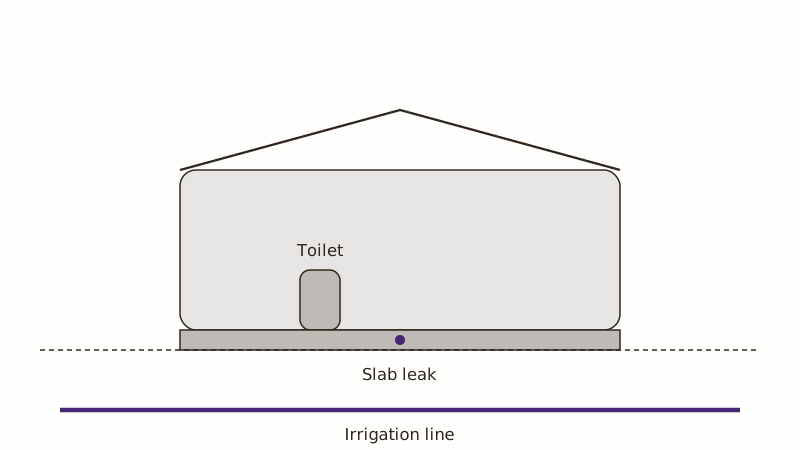
Clues include a warm patch underfoot, a faint hiss in the walls at night, damp or stained drywall, a stale odor, or a meter ticking over with every fixture closed. Hot-water lines in a slab are the textbook case. Tracing one takes equipment, so this belongs to a plumber.
Choices are described in slab leak detection and repair; leak detection pricing shows what a quote might hold. Ask whether the leak is located before any floor is opened.
Who do I call at the water utility?
The bill names your supplier. Inside the City of Ontario that is Ontario Municipal Utilities Company, office line (909) 395-2600. Monte Vista Water District serves Montclair and parts of Chino, and the City of Chino Hills runs its own billing at 909-364-2660. Jurupa Community Services District serves Eastvale and part of Jurupa Valley.
Ask them for a usage history, whether a leak adjustment exists and what the meter reading looks like. Some utilities offer help with high bills after a verified leak; ask what proof they want, such as a plumber's invoice. Also ask whether the meter was recently read or replaced, since bills can reflect estimated readings.
What else raises a bill without a leak?
Hot, dry months raise lawn watering, a filling pool or a new softener cycle can add water, guests and a new appliance increase use, and a rate increase raises the price per unit. A change in billing days can fold an extra bill into one period. Compare usage, not dollars, month to month.
More on this sits in what makes a water bill so high, and on softeners and usage. A clean meter test means the cause is use or pricing.
When does a plumber step in?
Once the meter says water is escaping and you cannot find where, or the leak lies below the slab, behind drywall or along a buried pipe. A license is required from $1,000 in labor and materials combined, and for permit jobs whatever their size. Request the number.
Ask what a visit covers, what locating the leak costs, and whether finding and fixing are billed apart. Set out the problem on the quote form. What you owe is the figure the plumber commits to after inspecting.
Back at the Ontario plumbing home page, you can see the other services.
Common questions
Is a vacation a good time to test?
It is ideal. Read the meter before leaving and again on return; with nobody home, any movement is a leak. Shutting the main valve while away also stops damage if a pipe fails. Check with the water utility and your insurer for any conditions that apply.
How big is the average household leak?
The EPA's yearly average is above 9,300 gallons. One running toilet, or a pinhole in pressurized pipe, can lose much more, and the meter shows it. Fixing even a modest leak protects floors and cabinets as well as the bill.
Will the utility forgive the bill?
Some utilities offer an adjustment after a verified leak is repaired, but policies differ. Call your supplier, ask what proof they need, and keep the plumber's invoice. We cannot promise any adjustment, and the rules come from your utility, not from us.
What should I have ready for the visit?
The meter readings and times you wrote down, the most recent bill, and any spots where you saw dampness or heard water. Clear a path to the meter, the heater and the main valve. Mention which toilets you have already dye tested.