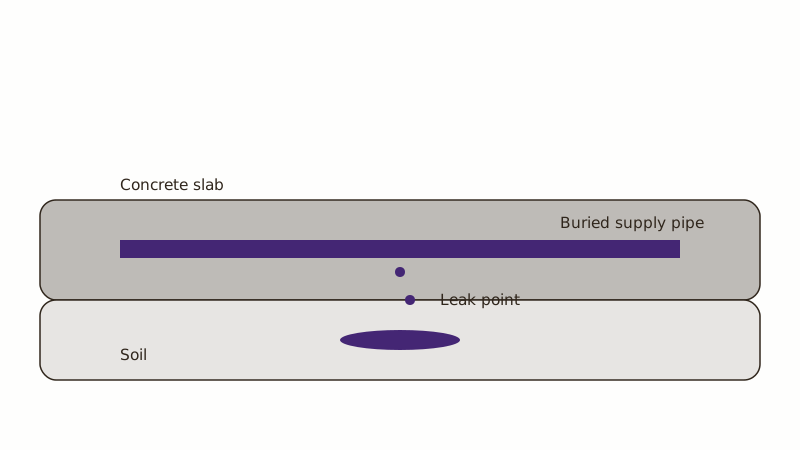
Pipes buried in or under a concrete floor can leak for ages while the surface looks perfectly dry. The earliest hint tends to be a statement, not a puddle: a bill creeping up, or a meter dial that will not stop. This guide is part of the leaks and burst pipes cluster and follows the job from suspicion to finished repair.
Which symptoms suggest a leak beneath the concrete?
Typical symptoms: floor patches that feel warm, a murmur of water moving through a quiet house, a climbing bill, damp or lifting flooring, fresh cracks in tile or along baseboards, a musty odor and weak pressure at the fixtures. A hot water line leaking under a slab often gives away its location by warming the floor above it.
No single symptom proves it. A toilet running endlessly, or a sprinkler line with a split, can also inflate a bill, which is why a plumber eliminates the obvious suspects first. Still, a warm patch that does not go away, plus a meter that keeps running with the house quiet, makes a slab leak likely. Other suspects are listed under a high bill and no visible leak.
Is it the slab, or just a fixture somewhere?
Isolate the house. Shut every tap, then study the meter along with the tiny flow indicator many meters carry, a little dial or triangle that spins on the faintest movement of water. Spinning means water is going somewhere. Now close the house main: if the meter stops, the loss is on the interior side; if it keeps counting, the loss is in the buried run that feeds the house.
The EPA's own approach: record the meter, hold off using water for two hours, then record it once more. A difference signals a leak. Toilets get a separate test, a few drips of food dye in the cistern, which the EPA also describes. If both tests pass but the dial still advances, suspect pipe that is buried or enclosed.
How do plumbers locate a slab leak without tearing up the floor?
They use non-invasive tools: electronic listening equipment that picks up the hiss of escaping water through concrete, infrared cameras for warm lines, pipe locators that trace the route, and pressure tests that isolate each branch. Used together, these narrow the leak to a small area, so any opening in the floor is as small as possible.
The process usually runs in order. First the plumber confirms a leak exists and which side of the house is affected, often by pressure-testing hot and cold lines separately. Then listening gear sweeps the floor along the pipe path, and a locator marks the line so the markings can be compared. What comes out is a spot marked on the floor, not a hunch. Ask whether the detection fee stands alone or counts toward the repair, and skim leak detection pricing before agreeing.
What repair options exist once the leak is found?
There are three main routes: open the slab and mend the pipe at its failure point, bypass the buried section with a new line run through the walls or attic, or repipe the whole house. Some contractors also offer epoxy lining of pipes, a method with mixed opinions that should be checked with the building department.
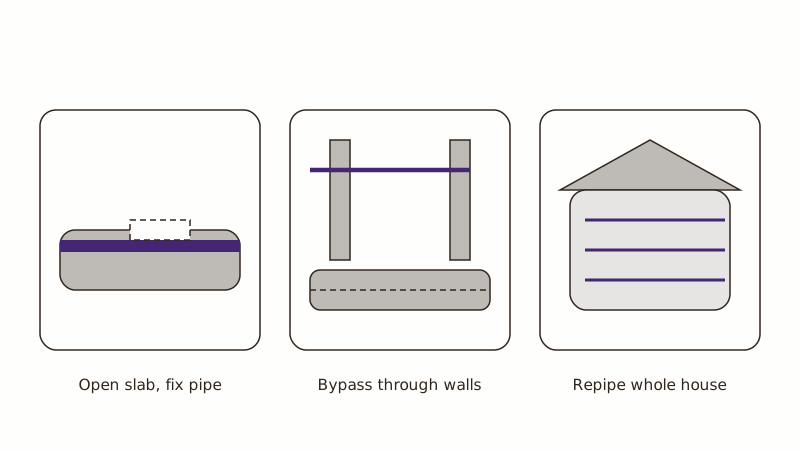
Which route fits depends on the location of the break, the number of leaks, the pipe material and age, and what is on top of the floor. One clean leak in a reachable spot suits a local fix, while a run of leaks in old pipe tilts toward bypassing or repiping. The head-to-head is in spot fix or repipe, and the money side is in slab leak repair cost.
Why do pipes under the slab fail in this area?
Aging copper that corrodes from the outside, joints that move as the slab settles, rubbing where a pipe meets concrete or stone, and chronic high pressure are the common causes. State plumbing code sets a static ceiling of 80 psi, and a house that runs above it strains every joint all day.
House age shapes the likely cause. Postwar tract homes in Montclair and Chino and older houses near downtown Ontario can have steel or copper that has been in the ground for decades. Newer homes in Ontario Ranch and The Preserve use plastic or PEX, whose failures are more often at fittings. Check pressure on any house with a leak history, and see whole house pressure regulators for the fix. Where land was once used for dairies, as in parts of Chino and Eastvale, soil conditions vary and are worth discussing with the plumber, though we cannot say how they affect your pipes.
What does the floor look like after the repair?
Getting at the pipe means cutting concrete, fixing the pipe, then patching the concrete. Whatever sits above, tile, wood or carpet, is disturbed, and matching it can be the biggest cost. A plumber normally handles the pipe and the slab opening while a flooring trade restores the surface, so settle early who owns which step.
Water that has been leaking for a long time can saturate subfloor, wall bottoms and baseboards, and mold is a real concern. The EPA says to repair plumbing leaks promptly and dry wet materials thoroughly, and for a large area of damage it points toward professional help. Keep the water use down and the meter readings recorded until the repair is done.
Will the repair need a permit, and what about insurance?
A repair of a short section may fall under a smaller scope than a repipe, but the rules depend on the work. Ontario Building at (909) 395-2023 can say what a given repair needs. Jobs that need a permit are reserved for contractors with a state license, a status that the state licensing site shows publicly. Insurance may pay for access yet frequently excludes the pipe, depending on the policy.
Check your policy before work begins and tell the insurer early. Our page on coverage for slab leak repair lists the points to ask. Photograph the meter, the floor and any damage, and request a plumber's report that records where the leak was, why it happened and what was done. That report supports a claim and records the work for a later sale.
Common questions
It depends on the flow. A small leak can run for months, quietly raising the bill and wetting the ground under the slab. A larger one shows up in days, with floors, walls and flooring affected. Because you cannot see it, the meter is the best early warning. A meter that moves in a quiet house is not something to postpone.
Should I try to fix it myself?
No. Finding it takes specialized equipment, and the repair means cutting concrete, working on pressurized lines and often a permit. A mistake can leave a larger leak or damage other pipes and electrical conduit in the slab. You can do the preliminary meter checks and shut the main, then leave diagnosis and repair to a plumber.
What helps in the days before the plumber arrives?
Shut the main if water is visibly escaping, or overnight if the meter is moving while nobody is home. Keep the meter readings, protect belongings from damp floors, and keep use down. Do not cut into the floor yourself. If the floor is warm or wet near an outlet, stay away from the electrical system and ask a professional.
Do I have to be present at the first visit?
Preferably, since the plumber needs to enter every room and reach the meter and main. An adult should approve the scope before concrete is cut and agree who finishes the flooring. Mention pets, alarms and stored items under beds or in closets so access is quick.