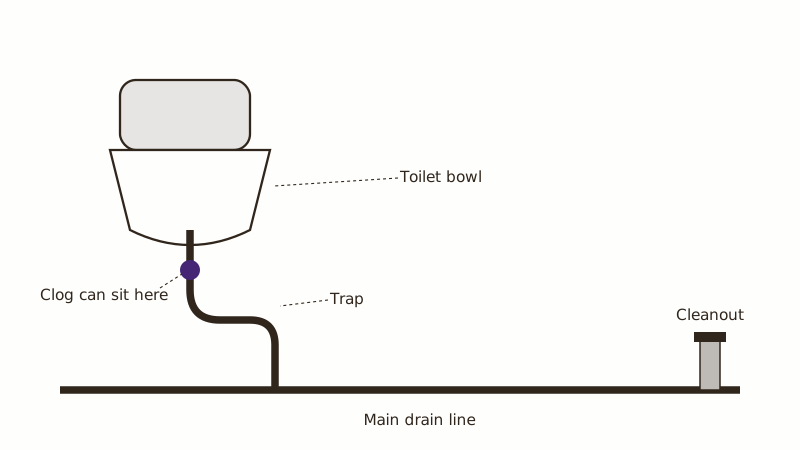
A stopped toilet has no flat rate, since the charge tracks the cause. A jam right at the bowl is a brief visit. A deeper one, or one that keeps returning, may mean lifting the fixture, or feeding a scope into the pipe. This page sits beside our guide to clogged toilet plumbers in Ontario and takes apart how a quote gets assembled.
What is a typical price to clear a blocked toilet?
We do not print a dollar figure here, because the cost surveys we could reach were behind access walls and we will not repeat a number we could not read. What can be said is the order: clearing a clog at the bowl with an auger sits at the low end, unbolting the toilet to retrieve a stuck object sits higher, and a stoppage out in the main drain sits highest.
Many companies charge a service call fee, then add labor on top, so ask which of the two a phone quote includes. Wages are only a floor under the price. Federal labor statistics list $30.67 an hour as median plumber pay in May 2025, which is what a worker takes home, while a company's rate also has to cover the truck, insurance, tools and overhead. Whatever number you hear first, wait for the written version, produced once the plumber has seen what is blocked.
Why does one stopped toilet run higher than the next?
Depth, whether the fixture must come off its flange, whether the jam recurs, and the hour you ring: those four set the price. A bowl-level plug is minor. A toy wedged in the trap, an old line that has sagged or roots in the main raise it, and night or weekend calls tend to carry a premium.
The list below runs from smallest to largest job:
- Plunger or hand auger working at the bowl
- Setting the toilet aside to reach the trap from below
- Feeding a snake along the branch line serving the bathroom
- A camera run to learn why it keeps backing up
- Hydro jetting, or excavation when a main line is damaged
When the tub gurgles at each flush, or every drain in the house runs sluggish, suspect the building drain instead of the toilet. That moves the job, and the cost, into another category. See also how clearing a sink drain is priced for a comparison.
Which DIY steps are worth a go first?
The right plunger for a toilet has a flap or collar that plugs the outlet; seat it and pump firmly, keeping the seal. Then there is the closet auger, a short crank-handled cable shaped for the bowl. A soft jam sometimes gives way to warm water and a little dish detergent. Each costs little and carries no hazard.
Pass on bottled drain openers. Caustic liquid can scald skin, spatters when you plunge, and if the clog stays put it lingers in the bowl for whoever works on it next. Keep every cleaner separate; mixing them is dangerous. Our how-to on repairing a blocked toilet walks through the plunger and auger steps in order. Ring a plumber if the water level creeps toward the rim, if the shower or sink also backs up, or if a hard object went in.
How do I judge a quote for a toilet clog?
Four questions cover it. Does the number include the visit and the first stretch of labor? What changes if the toilet needs to be unbolted? Is anything owed when the clog will not clear? Is a night or weekend rate in play? A quote that answers these on paper is easier to trust than a round number given over the phone.
Cheap-sounding offers deserve a closer read. A low headline fee may leave out the labor, and an offer that skips the question of what is actually blocking the drain can lead to a repeat visit. Should the porcelain prove cracked, a swap can beat a repair; replacing a toilet has its own pricing page, and toilet repair work covers parts like the flange, the wax ring and the fill valve.
Is hydro jetting the answer, or something I should buy?
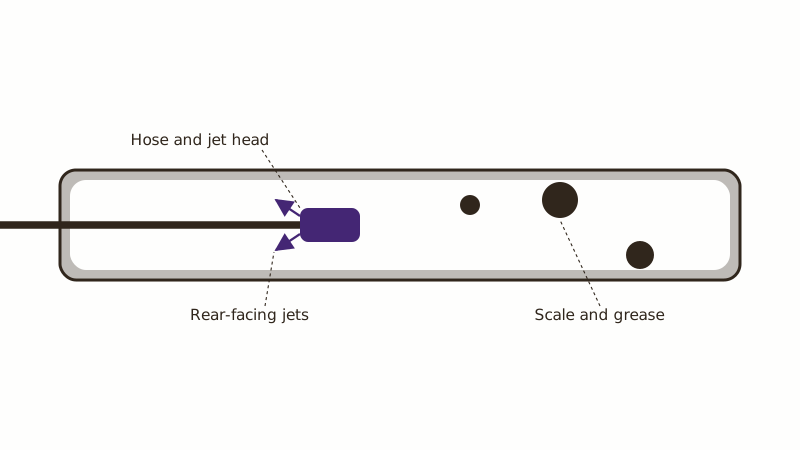
Hydro jetting is a nozzle on a hose that fires pressurized water inside a pipe, blasting off grease, scale and root hairs clinging to the walls. It suits main and branch drains rather than one toilet clog, and it is a deliberate choice made with proper equipment after a camera has looked inside. Renting or buying a consumer jetter is a poor idea for most homes, since pressure applied wrongly can damage an old line.
Houses near downtown Ontario and the Euclid Avenue historic streets may have older drain materials where aggressive cleaning needs care. Newer homes in Ontario Ranch and The Preserve often have plastic drains that tolerate more. Spot jetting on a quote? Ask why it is needed, and whether anyone inspected the line first.
Does it matter which water supplier or city I am in?
Not for the toilet itself, but a main-line blockage may run into the public sewer, and that changes who is responsible. In Ontario, the municipal utilities company handles sewer collection, and its number is (909) 395-2600. If your whole street backs up, tell the utility before paying for private work. Most clogs are a private matter inside the house or on your lateral line.
Common questions
Is there any heavy-duty fix for a toilet clog?
The strongest safe option is mechanical, meaning the flange plunger and then the closet auger. Strength from a bottle backfires, because a toilet drains through a narrow bend and caustic liquid just pools. When both tools fail, suspect an object or a deeper blockage, and that calls for a plumber with a scope or a longer cable.
The clog came back after a visit. Why?
Coming back almost always signals something past the bowl: a partly sagging line, roots, a clogged roof vent, or a low-flow toilet on a long flat run. Before paying for a second clearing, request a scope inspection of the line, and ask whether the toilet itself sits correctly on its flange.
Which items should never go down the toilet?
Wipes, including the ones marked flushable, plus cotton balls, hygiene products, paper towels, cooking grease and floss cause most of it. The pipe is meant for paper and waste, nothing else. A one-off accident often yields to a plunger, but a habit means the same wipes turn up in the line again.
Is someone required at the house when the plumber comes?
Yes, to unlock the door and indicate the right bathroom, with floor space around the toilet and access to the shutoff. A quick clearing at the bowl needs nothing more. If the fixture must be unbolted, keep your phone nearby so you can approve a revised price.