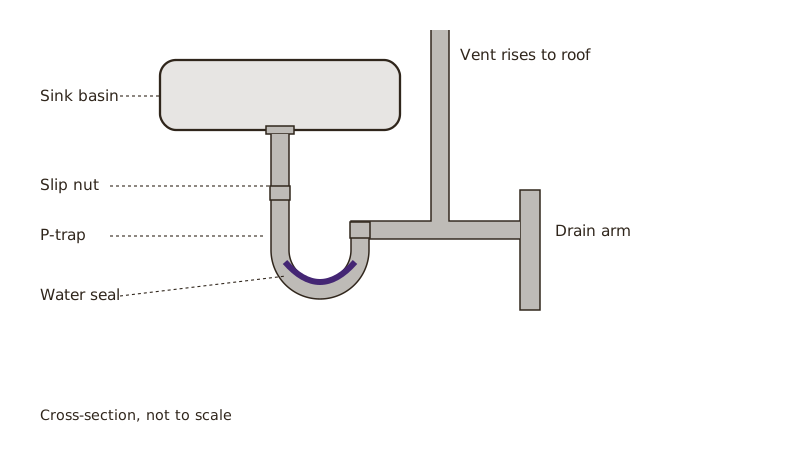
Plunger first, trap second. Between them, those two clear the bulk of sink clogs without a drop of chemical. Baking soda and vinegar, or hot water, can loosen light greasy buildup, and they are worth a try first when the sink drains slowly instead of standing full. This sits beside the guide to clogged drains and toilets, which covers clogs a sink remedy cannot reach.
Stop if the whole house drains slowly, or if the bathtub gurgles when the sink empties. That is a main drain symptom, and no amount of baking soda reaches it.
Which remedy should I try first?
Try them in order of effort: hot water, a plunger, a baking soda and vinegar flush, then the trap and a drain snake. Light grease and soap scum often give way to the first two. Hair and food bits need the trap or a snake. If a remedy has not worked after two tries, move on rather than repeating it.
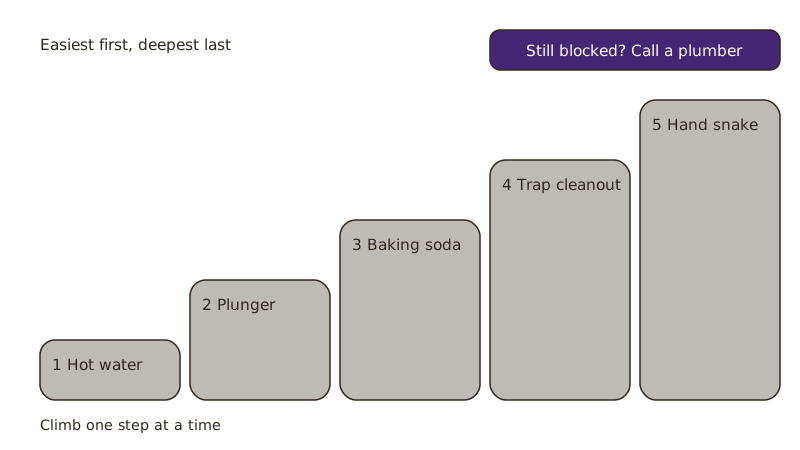
A sensible order for the kitchen sink:
- Hot water from the tap, running about a minute (not boiling, if your pipes are plastic; it can soften joints).
- The plunger, with the second basin and the overflow sealed by a damp rag.
- Half a cup each of baking soda and white vinegar, stopper in, a quarter hour of waiting, then a hot rinse.
- The trap, taken apart over a bucket.
- A hand snake or barbed plastic strip fed into the drain arm.
What is the right plunging technique for a sink?
Cover the drain completely, keep about two inches of standing water so the rubber stays wet, and seal the second basin and overflow. Pump firmly and steadily, around ten strokes, then lift the plunger off to break the seal. A few rounds are worth trying before you give up.
People lose the pressure by plunging a dry sink or leaving the overflow open. A cup plunger suits sinks, and the flanged kind belongs to toilets. Water rising in the other basin or the dishwasher tells you the clog lies past the point where the lines join. The tougher kitchen case is in the kitchen sink that holds water, and bathroom basins have their own page.
Is the fizzing kitchen remedy any good?
Partly. The foam loosens grease and soap film, which is the extent of its power. A hairball or packed food will not dissolve. Use it as light maintenance, or as a first attempt on a sink that merely runs slow, and flush with hot water afterward.
Results stay modest, but the mix is mild on pipes and disposals. Keep it away from store-bought drain cleaners, because combining chemicals can release hazardous gas.
Is it safe to pour chemical drain cleaner down the sink?
Best avoided. Caustic cleaners burn skin and eyes, and when you open the trap your hands end up in that standing liquid. Some damage fixture finishes and certain pipe. Mixing two products is dangerous. Reach for the plunger, trap or snake first.
Already poured some and the sink is still blocked? Say so when a plumber arrives, so protection is worn before the trap opens. Follow the label and ventilate the room. Sinks with a disposal add a wrinkle; freeing a jammed disposal drain comes before any pouring.
How does the P-trap come apart and get cleaned?
Bucket beneath, spin off the pair of slip nuts, ease the U-bend down and scrape the gunk out. Rinse it, look over the washers and thread everything back snug. If the trap comes out spotless yet water stays put, the clog lies deeper, along the arm or inside the wall.
A snake goes into the wall pipe and is cranked until it feels resistance, then drawn out slowly. A snake that stops short, or standing water that returns tomorrow, points to a stubborn plug or damaged pipe. Near downtown Ontario and the Euclid Avenue historic district, older drain lines in cast iron or galvanized steel can be scaled and rough inside, which grabs grease. Postwar houses in Montclair and Chino sometimes have roots reaching the outdoor lateral. Local hard water contributes: Ontario's 2025 report lists hardness averaging 91 to 177 ppm depending on the source. For sinks that crawl without ever stopping, try the slow drain explainer.
What tells me a plumber is needed?
Pick up the phone when the snake stalls, two or more fixtures run slow at once, water surfaces somewhere else, the blockage returns within days, or the pipe beneath the sink drips or looks corroded. A sewage smell counts too. All of these point beyond the trap, and forcing things risks a leak.
A trade visit brings a heavier cable, a high-pressure jet or a drain camera to find the cause. Weighing the expense? The cost of clearing a sink sets out what changes the price. A damp cabinet after your own repair usually means a loose slip nut, and stopping a drip under the sink covers it. Booking goes through the quote form, and other plumbing we arrange is listed at the home page.
Common questions
How soon will I know if it worked?
A plunger shows results in minutes, the fizzing flush after about fifteen, and trap cleaning in half an hour with the mess. Two rounds with no change suggests the blockage sits farther along, so bring out the snake or call a plumber.
What tools are worth buying?
Get a flat-rimmed cup plunger, which seals a sink drain, and a short hand snake for the drain arm; a barbed plastic strip also pulls out hair. Motorized augers belong in experienced hands, since they can scratch or crack pipe.
Does anyone else need to be there?
Not for a do-it-yourself try. If you hire help, an adult should show which sink is affected and confirm the finished work, and the cabinet under it should be emptied first. Lay down a towel and bucket before any trap comes apart.