Work through four steps in order: the stopper, the plunger, the curved trap, a thin snake. Stop the moment water runs. Every step is cheaper and kinder to the pipes than the next, and by the last one you'll know whether this is a thirty-minute chore or a call for drain cleaning services. A bathroom toilet that won't clear is a different case, and our guide to clogged toilets covers it.
Why does a bathroom basin clog in the first place?
Hair is the villain. Strands wrap around the stopper's lower arm or the cross-bar in the drain, then trap soap curd and toothpaste until the gap narrows to a trickle. A second layer of gunk coats the inside of the curved trap below. Blockages farther down the line are less common, and they behave differently.
Here's a ten-second test. Fill the basin and open the drain. Only this basin slow? The blockage sits close by. Shower and tub sluggish too, or a gurgle from the toilet? The problem is farther down the line, and no stopper trick will fix it.
Minerals add a little. Ontario's own report for 2025 lists hardness averaging 91 to 177 ppm by source. Mineral film may roughen a drain wall so lint catches there. That's a small factor, nothing worth buying equipment for.
Step one: how do you get your fingers on the stopper and the drain mouth?
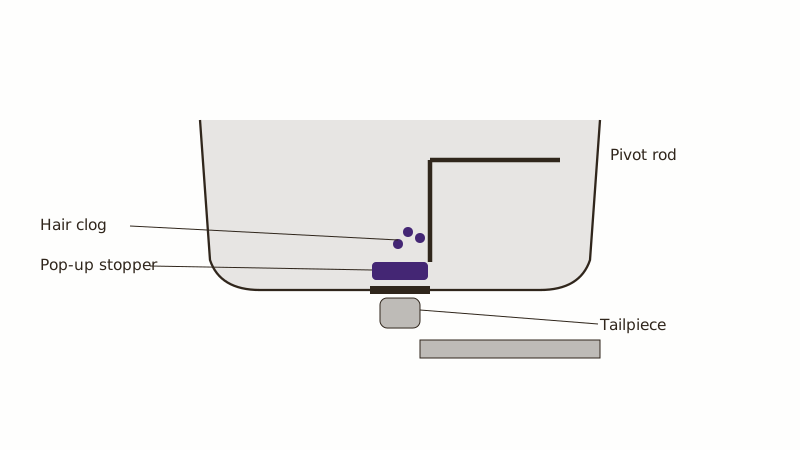
Some pop-ups simply lift out. If not, reach under the basin, squeeze the spring clip on the pivot strap, slide the horizontal rod out of the tailpiece, and the stopper drops free. Wipe the hairy mass off with paper towel. Peer down the opening with a phone flashlight and pluck out whatever shows.
Photograph the linkage before you touch it. The rod, strap and clip go back in one order only, and a snapshot saves a frustrating ten minutes. Slip a bucket beneath if water is standing in the pipe.
A barbed plastic strip, sold cheaply at hardware stores, snags hair your fingers can't reach. Push it in, twist, draw it up slowly. Then open the hot tap and watch the swirl. If the basin empties briskly, you're done.
Step two: when does a plunger earn its place?
When the stopper area is clean yet water still lingers, the plug is typically in the trap or a little beyond. Wedge a wet washcloth over the overflow slot, keep about an inch of water over the drain, seat a small cup plunger flat on the porcelain, and pump firmly for roughly twenty seconds. Pull it off and watch whether the level drops.
Skipping the rag wastes your effort; the air shoots out of the overflow hole and nothing moves. A cup plunger is the right shape for flat basin bottoms. The flanged kind made for toilets seals badly here.
Don't plunge a basin that still holds chemical drain cleaner; caustic splashback in the face is a genuine injury risk. If someone in the house already poured a product down, warn whoever opens that pipe afterward.
Is the fizzing kitchen-cupboard method any good?
It deodorizes and loosens a thin film, but it won't dissolve a hair mat. Typically that means a measured scoop of baking soda, an equal amount of white vinegar, a quarter hour of fizzing and a hot-water rinse. Think upkeep rather than rescue.
Plenty of people stop here, which is why drains stay slow. If the mechanical rungs didn't help, fizzing powder won't either. Our page of pantry remedies for drains weighs the options honestly.
Keep two cautions in mind. Never combine different chemical products, because some pairings release toxic fumes. And skip boiling water if your trap is plastic or the basin is cracked; heat can warp or split them.
Step three: how do you open the trap?
Set a bucket below the U-bend. Unscrew both large slip nuts (fingers first, pliers only if needed) and let the bend drop away. Empty and scrub it, then peer into the wall stub with a light. Rebuild with each washer sitting flat; hand-tight plus a short extra twist is enough.
This is the most productive rung, since grease and hair settle in that bend like silt in a river. Take care with old chrome tubing, which can be thin and crack under pliers. If a slip nut is frozen, stop and ask for help rather than risk a split pipe.
With everything reassembled, fill and release the basin, then drag a dry fingertip along each joint. A weeper normally needs a nudge more tightening. Found something worse? A pipe leaking beneath the basin has its own guide.
Step four: is a small hand snake worth using?
Thread a slim hand auger, or a long plastic claw, into the wall stub the trap came off. Turn the handle as you advance, note where it stiffens, and keep turning until the clog breaks up or snags on the tip. Pull back slowly and wipe whatever comes out.
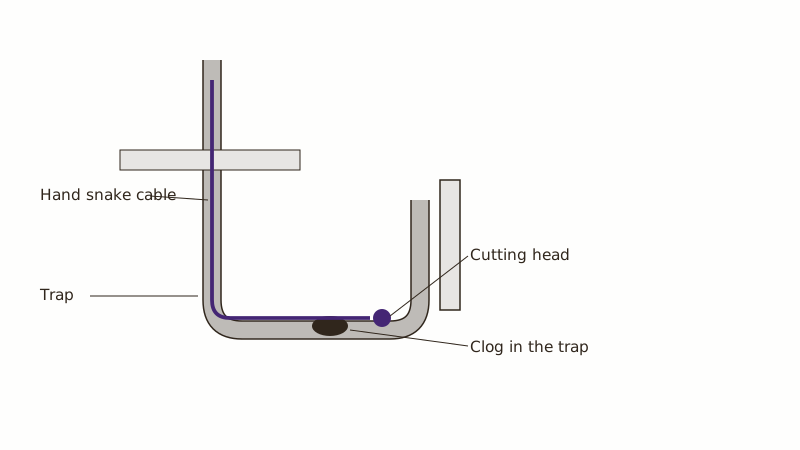
Don't force a cable around a sharp turn. If it jams, back off and let it relax. A hard stop that won't clear after a few tries more often points to a plug out in the branch line, not the basin's own piping.
Beyond this lies camera inspection or a powered cable machine, which belongs to a professional. For a bathroom basin, that's where the DIY road honestly ends.
At what point should you hire help?
Call someone if several fixtures run slow, other drains gurgle, there's a sewer smell, or the basin stays full after all four steps. Those signs say the trouble is deeper in the branch or main, and a plumber has cable machines and cameras that homeowners don't.
Ontario Municipal Utilities Company handles wastewater collection for the city. A blockage that a camera places beyond your property line is the utility's matter, not yours. Which side you're on is something a plumber can establish. Never open a yard cleanout cap unless you know what might come out.
Renting? Loop in the landlord before calling anyone. Slow drains in general are explained in why a sink drains slowly (the same causes, any sink); the kitchen equivalent is a clogged kitchen drain. For money questions, read what unclogging a sink costs, and the Chaffey Pipe and Drain home page shows everything else.
Common questions
How long will all this take me?
Allow ten to twenty minutes for stopper plus plunger, and about twenty more for the trap, much of it bucket work and mopping up. If you reach the snake and nothing changes, you've spent a reasonable amount of effort. That's the point to book someone with proper equipment.
What should an estimate for drain work list?
Look for flat price versus hourly, camera extra or included, and how the price moves if the clog is out in the main. Get the total on paper before work starts. Jobs of $1,000 or more in labor and materials also fall under California's contractor-license rule.
Must I be around while it's done?
Yes, for part of it. An adult unlocks the door and approves the price. Clear out the vanity cabinet for working room, and move toiletries off the counter. If a camera is used, the plumber may want to show you the footage on the spot.
Are store-bought drain openers safe?
Not especially. They're corrosive, which means burns to skin and eyes, possible damage to fittings and a hazard to whoever opens the pipe later. If you use one regardless, wear gloves and goggles, obey the label exactly, and never combine products.
What makes a clog keep returning?
A repeat clog points to something catching. Maybe a rough pipe joint, a trap that sags, grease in the line or a stopper that collects hair quickly. Cleaning the stopper monthly helps. If it still slows every few weeks, have a camera inspect the line.