Patch the one spot if the rest of the plumbing is healthy. Replace the lines if they are worn out, or if this is not the first failure. Our broader guide to leaks and who fixes them covers finding the leak; the page you are reading starts after it has been found beneath your floor.
Three things steer the choice: where the failure sits, what the pipe is made of, and how this house has behaved before. Describe the symptoms in the quote form. A visit establishes the rest, and the options come back to you in writing.
What do my choices look like?
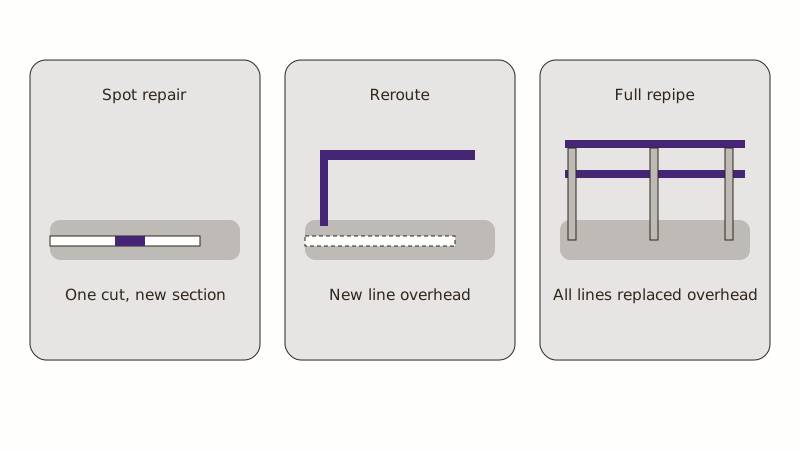
There are three realistic routes: repair the single leak where it sits, reroute the failing line overhead so the slab stays untouched, or repipe the whole house. The table shows what each involves and when it tends to make sense. A written quote from the plumber who inspects the home should name which route it prices.
| Route | What happens | Best when |
|---|---|---|
| Spot repair | Concrete is cut over the leak and new pipe is spliced in | One clean failure, healthy pipe nearby |
| Reroute | One line is retired and replaced by new pipe overhead | One line keeps failing, or access is awkward |
| Full repipe | All supply lines swapped out, normally overhead | Old, corroded, or repeat-failure plumbing |
The cost of each is not just plumbing. Breaking the slab means dust, floor removal and patching afterward. A spot repair is the smallest job but leaves old pipe behind, and pipe that failed from corrosion tends to fail again within reach of the first hole. Some companies also coat the inside of old lines with epoxy; ask the plumber whether it fits your layout before counting on it.
How can I tell the water is going under the slab?
Warm patches underfoot, a hiss with the taps closed, damp carpet edges and a dial on the water meter that never rests all point downward. A plumber then closes off each branch and watches pressure to find the failing line, and uses a listening device or thermal camera to mark the spot before any concrete is cut.
Marking first is worth the fee, because a wrong guess means opening the wrong room. Heat helps: hot lines announce themselves, cold ones whisper. Testing methods are described in finding and fixing slab leaks, and leak detection fees explains what the locating step usually involves.
When is a whole-house repipe the smarter move?
When the pipe type has a poor record, when the house has now leaked twice, or when pinholes, green crust and thin flow turn up in other rooms. One isolated failure on sound pipe argues for patching. Pipe age and material tell most of the story, and they vary by neighborhood.
Copper under a slab can develop pinholes over decades, especially in hard water. Ontario's 2025 report lists hardness averaging 91 to 177 ppm depending on the source, and Chino's 2024 report shows its own wells reaching 280. Homes near downtown Ontario and Euclid Avenue may still carry galvanized steel, which corrodes inward. Ontario Ranch and The Preserve homes are largely PEX. Lifespans are discussed in how long pipes last before a repipe, and the overview of the repipe job shows what replacing everything involves.
What decides the price?
Depth and access of the leak, the amount of concrete and flooring removed, the number of lines replaced, and permit costs. Finishing work such as matching tile or hardwood can rival the plumbing. This page quotes no dollar amounts because we have not read a source for this area, so treat any figure you hear as unverified until it is on paper.
A reroute or repipe normally involves a permit that the contractor obtains from the city. Ontario's Building office is on (909) 395-2023 and Chino's is on 909-334-3251. The estimate built around your house is the only figure that counts, and a written comparison helps: slab leak costs and the price of a repipe show how each is built up.
How does a slab-house repipe actually go?
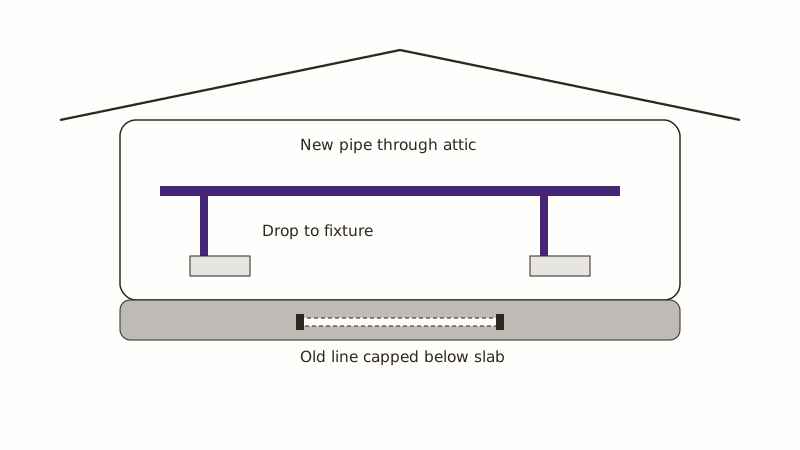
New lines are pulled through the attic and walls and dropped to each fixture, so the slab stays untouched. Old lines below are capped. Expect small drywall openings at fixtures, a stretch of days when water is on and off, a permit, an inspection, then patching and paint.
Choosing the pipe is part of the job. PEX is flexible and quick to route; copper is rigid with a long record. A head-to-head comparison sits in PEX versus copper. Water pressure counts as well, since new fittings suffer when it climbs beyond 80 psi. The order of work is in the repiping steps.
Common questions
How long does the mess last?
Breaking and mending concrete over one spot may take a couple of days, before the floor is patched. Rerouting stretches to a few. Replacing everything often runs most of a week, and drying and cosmetic repairs come after. A schedule should accompany the estimate you receive.
Which questions belong on the estimate?
Find out how the leak was located, what each option costs on paper, if permit fees are in the price, who rebuilds concrete and flooring, and what stays abandoned below. Ask if the surviving lines were pressure-tested. Contractor license rules in California apply to permit jobs and anything reaching $1,000, so the estimate should carry a license number you can look up.
Do I stay home while this happens?
Someone should be present for access when work starts and again to review the day's progress, because floors and walls are open and water gets shut off in stretches. Plan where children and pets will spend those hours, and clear a path to every fixture and to the meter.