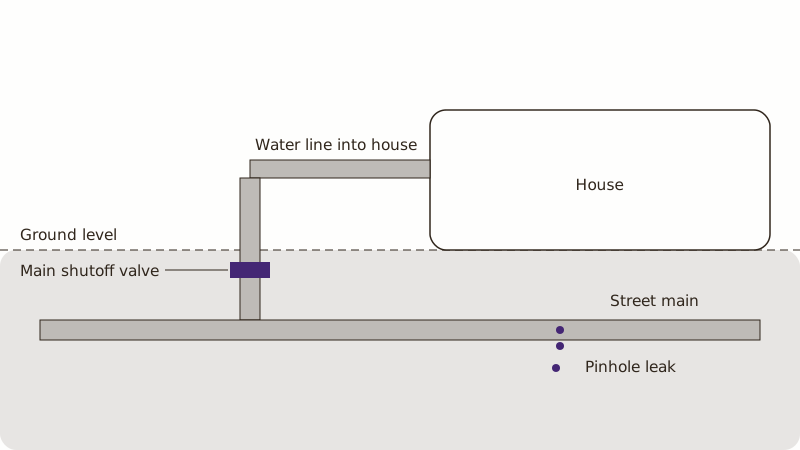
Turn the main shutoff clockwise until the hissing stops, which sits wherever the line enters the property, often at ground level on the street side. That buys time. A plumber for leaks in Ontario then follows the water to its source, replaces the failed section and flags any wet drywall. Type what you are looking at into the quote form. Someone local visits, then itemizes the cost before starting. The home page shows the other jobs.
Some leaks announce themselves: a split under the kitchen sink, a brown stain creeping across a ceiling. Others hide in a wall cavity or below concrete for months and surface only as an odd bill. Both kinds are covered below.
Which quick fix will slow a leaking pipe?
Expect any of three stopgaps to last a day, maybe two: a lined clamp, silicone wrap stretched over itself, or putty that cures hard. Drain the line first. Nothing in a hardware aisle bonds to a pipe with water still pushing through it, and every one of these is temporary.
What each stopgap suits:
- Clamp: pinholes and short splits on straight runs of copper or plastic.
- Silicone tape: a seep at a fitting where a clamp will not sit.
- Epoxy putty: a dry, sanded spot on metal, left to cure.
- Towel and bucket: a joint buried behind a vanity, with the valve closed until help arrives.
Corrosion rarely stops at one spot. If one pinhole opened, the pipe around it is thin as well, so the patch usually just relocates the next failure. For what a durable fix looks like, see the pages on repairing a leaking copper pipe and pinhole leaks in copper.
Does leak sealant from the store work?
Sometimes, on the right material. Putty and wrap tape cope with household drips. Threaded joints want PTFE tape or pipe dope applied at assembly, not smeared on after trouble starts. Plastic joints are solvent-welded, so a surface sealant on a glued PVC fitting is a bandage, nothing more.
Pressure decides a lot. Static pressure above 80 psi breaks the limit in the state plumbing code, so a gauge reading higher is worth a call. Above that, every fitting works harder. Leaks that keep turning up at unrelated joints are a cue to measure pressure with a threaded gauge from the hardware store. Readings well over 80 point at a failed regulator, which is a separate repair. A longer comparison sits in water pipe leak sealant, and the plastic-pipe side is in leaking PVC joints.
What does a burst pipe do to a house?
Pressurized water leaves a split pipe at several gallons a minute until someone closes the supply. It saturates insulation, drywall and flooring and can reach outlets. Shut the main, then call. Switch off breakers for the soaked area only from a dry spot. Photograph everything before the mop comes out.
The photos matter later, because an adjuster works from them. Open windows, set fans going and pull up rugs. Wet drywall left a day or two can start growing mold, so drying is half of the job. If you are unsure that a burst even happened, telling whether a pipe burst lists the clues, and what soaked drywall and floors need covers the aftermath.
Whose job is it to pay for a burst pipe?
Homeowners generally answer for the service line and every pipe after the meter. Renters normally hand repairs to the landlord, since a rental has to be fit to live in, and working plumbing is part of the state's test for that (Civil Code 1941.1). Report it in writing with a date.
On the street side, the water provider is in charge. Ontario Municipal Utilities Company handles water for the City of Ontario, while Monte Vista Water District and the City of Chino serve their own areas, so check which one prints your bill. Insurers treat a sudden split differently from years of seepage. Usual policy wording is unpacked in a claim after a burst and in the matching page on slab leaks and homeowners policies.
How can I locate a leak I cannot see?
Your meter is the first witness. Close every tap, open the little cover, and stare at the dial for two minutes. Creeping numbers mean escaping water. After that, tint each toilet tank, give it ten minutes, and peek in the sink cabinets and at the foot of the water heater.

Other hints that water is escaping:
- A floor slab that feels warm underfoot in one patch, suggesting a hot line below.
- A faint trickling noise at night with everything off.
- Paint bubbling on a wall beside a bathroom.
- Higher bills with no change in routine. Small drips matter: EPA puts a household's yearly loss from leaks above 9,300 gallons.
Plumbers pinpoint a hidden leak with acoustic listening gear, thermal imaging and pressure testing, which avoids opening walls at random. Fees are laid out under what leak detection costs. Unexplained bills are covered in a high bill and no visible leak, and floors are handled in finding and fixing a slab leak.
Who answers when water is pouring right now?
Phone us during office hours, or drop a photo into the quote page whenever it suits you. Keep the main shut meanwhile. Water touching the breaker panel means everyone leaves and someone rings 911. Smell gas? Step outside, then dial SoCalGas, 1-800-427-2200.
Night bursts get their own walkthrough in urgent burst pipe help. A wet ceiling is a puzzle, because the culprit may be the roof, a bathroom upstairs or a supply line; sorting out ceiling leaks narrows it down.
Which leaks come up most, and does the age of my house matter?
It does. Everyday nuisances are dripping faucets, toilets seeping into the bowl and cracked supply connectors. Hidden failures track the house's era. Around downtown Ontario and the Euclid Avenue historic district, older homes may carry clay drains and galvanized steel supply that rust from within. Postwar tract homes in Montclair and Chino lean toward copper, which fails as pinholes. Newer Ontario Ranch and The Preserve homes use PEX and plastic, where trouble sits at fittings.
For more, read why pipes split in what makes pipes burst and how to head it off in preventing a burst. Leaks under a floor are priced in what a slab leak repair runs, and the patch against replace debate is in patching a slab leak or replacing all the lines.
Common questions
Will fixing a burst pipe be costly?
A pipe in plain view under a sink is quick work. One inside a wall adds cutting drywall, then patching and painting. We list no dollar figures without a source we have read, so only the written estimate you receive settles the actual number. Have the wall work itemized apart from the pipe.
Does home insurance pay when pipes burst?
Policies commonly pay for abrupt, accidental water damage. The pipe that failed, and damage from long, slow seepage, are frequently excluded. Yours decides. Phone your agent before repairs start and keep photos and the invoice. The page on coverage for burst pipes lists wording to look for.
Which household leak happens most?
A dripping faucet and a flapper that seeps into the toilet bowl top the list. Both are small and easy to ignore. A new flapper or faucet cartridge is usually the cheapest way to cut into the more than 9,300 gallons the EPA says an average household leaks yearly.
How long before someone qualifies as a plumber?
Several years, because apprenticeships run that long. California's Contractors State License Board asks plumbing contractors for documented trade experience and passing exams. So permit jobs, and any job where labor plus materials hit $1,000, go to a contractor with that license.
How are split pipes priced?
Charges reflect hours on site, difficulty of access, parts, and whether a wall or floor must be opened. Rates differ by company, and a plain statement on the quote you hold is what fixes the price. Compare two quotes item against item.