Some bursts are loud and obvious. Others hide behind drywall or under concrete and surface only as a bill or a stain. This guide, filed under leaks and burst pipes, is for the second kind as much as the first. If water is actively flowing, go to the emergency page and shut the main first.
What does a burst water pipe look like in a house?
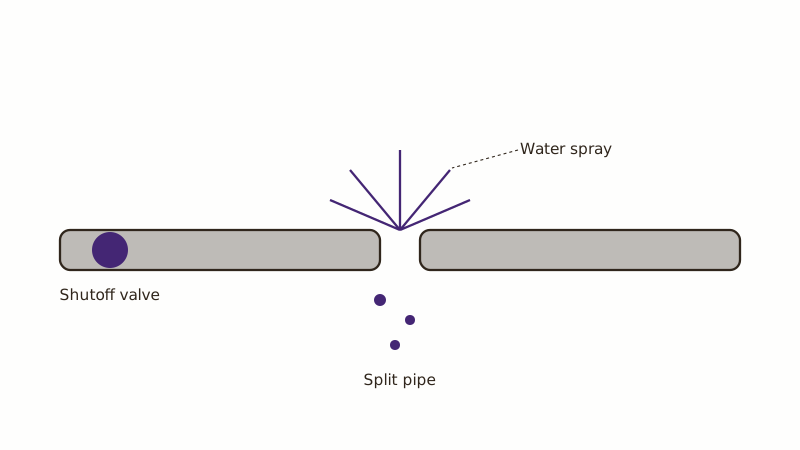
A split pipe can show as a spray, a steady drip, a damp patch spreading across a wall or ceiling, bubbling paint, a warped floor, or just a faint hissing from a wall. Sometimes it shows as nothing visible at all: the water meter keeps turning and the bill climbs. What you notice depends on the pipe's location.
Look for these in order of how often homeowners notice them:
- A ceiling stain that grows or turns brown at the edges
- A soft rushing noise inside a wall though nothing is in use
- A hot spot or damp feel on a floor, a possible clue to a hot line beneath the slab
- Mildew smell in a cabinet, closet or garage wall
- Lower water pressure at every fixture, not just one
- A water bill that leaps although nobody changed their routine
A longer symptom checklist sits in recognizing a burst, while the damage a burst leaves behind describes how it looks days later.
How can I confirm a burst before calling anyone?
Start at the meter. Confirm that nothing indoors or out is using water, write down the meter digits, leave it two hours, then compare. Movement means water is escaping somewhere. The EPA lists this same check among its household leak tips. It tells you a leak exists, not where, but it separates a real loss from a faulty fixture.
The next step narrows it down. Close the house main; if the meter freezes, the loss is on your side of it. Close the individual shutoff valves under sinks and toilets one at a time to rule out a single fixture. A meter still creeping while each fixture is isolated implicates the supply line itself. Photograph the meter readings with the time, since they help a plumber and an adjuster.
How do plumbers find the break?
They match the symptom to the pipe route, then use tools to narrow it: acoustic listening devices that pick up the sound of escaping water, thermal cameras that show the warm trail of a hot line under a floor, pressure tests that isolate a section, and moisture meters on walls. The goal is a small access hole, not a demolition.
Slab breaks are the tough case, since the pipe is under concrete and may run across the whole house. That process gets its own treatment under finding and fixing a slab leak. In walls, the plumber may cut a drywall opening where the stain and the pipe route meet. Leak finding often has its own fee, so see leak detection cost before you agree.
Why do water pipes burst in Ontario homes?
Age and material fatigue lead the list, followed by pressure, corrosion, bad joints and the occasional freeze. California's plumbing code caps static pressure at 80 psi. A house whose regulator died, or never existed, loads its pipes and fittings around the clock.
Material counts. Steel and copper in older blocks around Euclid Avenue and downtown Ontario corrode over decades. Newer homes in Ontario Ranch and The Preserve are often plastic, whose weak points are fittings and sun-exposed runs. Pressure control belongs to the main supply, and the page on pressure regulators for the whole house helps if fixtures blast or pipes bang. Deeper detail on causes is in why pipes fail.
How is a burst pipe repaired?
It depends on where it is and the material it is made from. A short, reachable stretch gets cut out and spliced with fresh pipe and fittings. One pinhole in copper may be fixed locally, but a string of them says the whole run is wearing out. If one burst follows another, a repipe of the affected branch, or of the house, is the option to weigh.
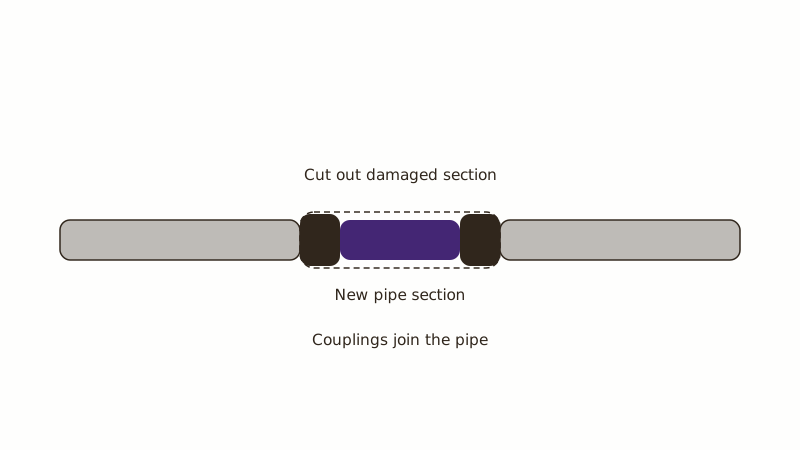
A clamp or sleeve may slow a leak until help comes, yet tape and sealants are stopgaps, not repairs. A repair in a wall usually leaves a drywall patch that someone else finishes. Permit rules depend on the scope; a small repair may not need one, while repiping often does. Ontario Building at (909) 395-2023 answers that for a specific address. Common copper fixes are laid out in mending a leaking copper line.
What happens after the pipe is fixed?
The house has to dry. Wet drywall, insulation and carpet can grow mold, and the EPA wants plumbing leaks mended promptly and everything wet dried through. For heavy damage, or mold covering around ten square feet, it directs readers to professional guidance; sewage or similar contaminated water belongs to a professional.
Drying usually involves removing wet materials, running fans and dehumidifiers for days, and checking moisture levels before closing walls. Hold on to photos, receipts and notes for the insurer; claims after a burst covers that side. The plumber mends the pipe and a mitigation firm dries the house. Those are separate trades, so ask who coordinates.
Can I prevent the next burst?
Partly. You can check pressure, replace worn supply hoses, insulate exposed pipes, find the main valve, and open and close it fully once each spring, and replace pipe types known to fail. Prevention cannot rule out a failure, but it moves the odds. A repipe is the long-term answer for lines that keep failing, while a regulator is the cheap fix for high pressure.
See burst pipe prevention for a seasonal checklist. Every other plumbing topic we cover is reachable from the Chaffey Pipe and Drain front page.
Common questions
How long will the repair tie up the house?
An exposed stretch can be finished in hours once it has been located. Hidden breaks run longer, since the plumber must trace the leak, open the wall and test afterward, and drying and rebuilding come on top. We do not promise times; the plumber gives an estimate after seeing the damage and the access.
Which questions come before work starts?
Ask where the break sits, why it failed, whether neighboring pipe is at risk, and what the quote covers: pipe, fittings, permit, wall opening and patching. Run the contractor's name through the state board's lookup, bearing in mind that permitted jobs go to contractors with a state license and that deposits on home work are capped. Ask for replies in writing.
Is attendance required during the job?
At the beginning, yes: open up, indicate where water appeared and settle the scope, since walls or floors might be opened. After that, fewer people are needed. When you truly cannot attend, name a contact and confirm the plumber has access to the shutoff and the damp area.