Every burst has the same root: the force inside a pipe becomes larger than the wall can hold. The usual sources are ice, water pressure above what the system was built for, corrosion that thins the metal, and joints weakened by years of knocking. For repairs, go to the leaks hub. This page sticks to causes, signs and the first move.
What makes a pipe burst at all?
Pressure and weakness. Four causes cover almost every case: freezing, high static pressure, corrosion and water hammer. Roto-Rooter's guide lists all four, and adds age, since plumbing does not last forever. Most bursts involve two at once, such as old corroded pipe on a line running high pressure.
Home pressure typically runs 30 to 50 psi, and the same guide says it should not exceed 60 psi, to avoid damage to pipes and fixtures. The California Plumbing Code puts a hard ceiling at 80 psi. A failed pressure regulator is therefore a hidden cause worth ruling out; see where the regulator sits.
Why does cold weather split a pipe?
Freezing water expands and pushes up the pressure in the pipe, which is why Roto-Rooter singles out uninsulated pipes in basements, garages and crawl spaces. Damage often becomes visible only at the thaw, when water pours through a crack that ice had been plugging.
A deep freeze is not a regular event in Ontario or Chino, so the pipes most at risk are the exposed ones: garage runs and outdoor fixtures. A pipe that froze once is weaker afterward. Wrapping and tap habits are in how to prevent a burst.
Can a pipe burst when it is hot out?
Without freezing, the leading suspects are pressure and corrosion. Water pressure can creep up when a regulator fails. A pipe already thin from corrosion may hold for years, then split when a valve slams shut or pressure spikes, and the season has nothing to do with it.
Warm-season bursts are also tied to water hammer, the shock wave when a valve shuts quickly. Roto-Rooter notes loose or poorly installed pipes can move and slowly weaken joints. Our page on water hammer noises explains the knocking sound that often comes first.
Does old pipe fail more often?
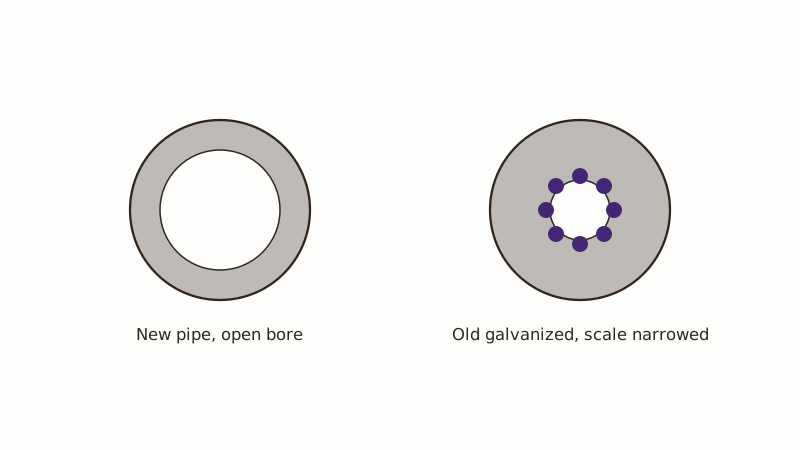
Yes, particularly galvanized iron. Roto-Rooter says mineral buildup and rust in older galvanized pipes can narrow them and eventually cause a failure or a clog. Homes near downtown Ontario and the Euclid Avenue area, and some postwar tract homes in Chino and Montclair, are the likelier place to find old galvanized lines.
Newer areas such as Ontario Ranch tend to have different materials, and the problems there are usually joints, fittings or pressure. Unsure what you have? Any plumber can tell at a glance from the pipe near the meter or under a sink. The route out is described under replacing galvanized pipe.
What are the warning signs?
Faucets that sputter or pressure that swings are the early tell, followed by puddles under sinks or in the yard, noises in the walls, and stained or bulging ceilings. Peeling paint, mold and rising humidity come later, as does a water bill that leaps without explanation. A rotten-egg smell may mean a broken sewer line.
Quiet leaks need the meter. The EPA's trick is to note the reading, then go two hours without running water; any movement means a leak. A break inside a wall or slab calls for leak detection and repair by a plumber.
What should I do when one lets go?
Close the main water supply straight away. That limits the damage, and it is the one step that is safe for anyone. If water has reached electrical parts, switch off the breaker for that zone and call an electrician rather than wading in.
Next, drain the line from the lowest tap, lift valuables out of the way and photograph the mess if you plan to claim. Then ring for a plumber. How we send one is on the emergency burst pipe page, and claims are in the insurance guide.
How do I check whether pressure is my problem?
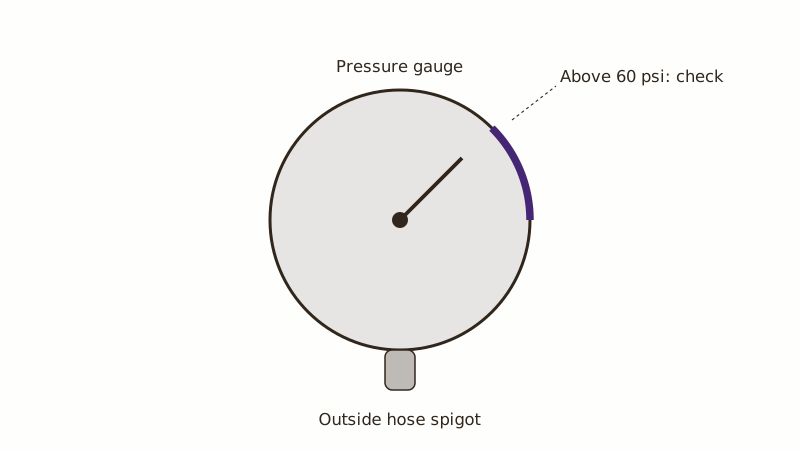
Screw a gauge onto an outside hose spigot, confirm nobody is running water, and read the dial. Anything above 60 psi is worth attention. One California water district's FAQ says builders must fit a regulator when street pressure exceeds 80 psi, and that most regulators come preset at 45 to 60 psi.
A reading that is higher than that, or that climbs over the hours, points at a failing regulator, which sits on the main line near where water enters the house. Adjusting or replacing it belongs to a plumber. Our page on regulator replacement goes through what happens.
To see what else we send plumbers for, visit Chaffey Pipe and Drain.
Common questions
Fix the split or replace the pipe?
Either. A single split in sound pipe can be cut out and spliced. If the pipe is old, corroded or has failed in several places, replacing a longer run makes more sense. The plumber decides after seeing the failure and checking the pipe on either side.
Do pipes that never froze need a look?
Cold is only one cause; pressure, corrosion and age work in any weather. If a gauge reads above 60 psi, faucets knock, or the pipes are old galvanized iron, a check is a sound idea. Insurance questions are on our page about burst pipes and insurance.
Who pays for water damage?
That hinges on the policy and what caused the leak. Some policies pay for a sudden burst and not a slow leak, though terms differ. Phone the insurer promptly, document everything and keep receipts. Ask the insurer what it expects before any repair starts.
Will they have to open the wall?
For a pipe inside a wall, usually at least a small access hole. Plumbers cut as little as they can, but the pipe has to be reached. Drywall patching and paint usually sit outside the plumbing job, so ask who handles them before agreeing.
Are copper and plastic lines safe from bursting?
No pipe material is immune. Plastic and copper both split when ice or excess pressure acts on them, and a fitting is usually the weak spot. Newer materials tolerate more than old galvanized steel, but a regulator stuck high will test any system. The plumber can read which you have.