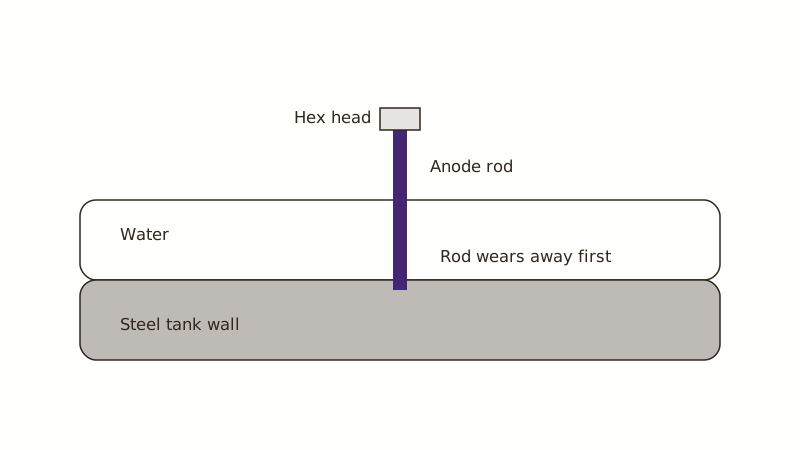
Why is there a metal stick inside my water heater?
Think of it as a bodyguard. The steel tank wants to rust, and a rod of softer metal, commonly magnesium or aluminum, screwed into the top volunteers to rust first. While the rod lasts, the tank wall is spared. Once it dissolves, the tank takes the hits. So a modest part ends up setting the lifespan of an expensive appliance.
The principle is called galvanic protection, and it is the same trick used on boat hulls and buried pipelines. The water heater repair overview places the rod among other wear parts. If water is already dripping from the tank itself, a rod will not help, and the leaking heater page deals with that situation.
When is it time to swap the rod?
Condition beats calendar. Manufacturers' manuals tend to say: look at the rod a few years in, then check it periodically, and replace it when it has been mostly eaten away. Water that is heavily softened or otherwise aggressive shortens the cycle. Your own manual has the schedule that goes with your warranty, so read it.
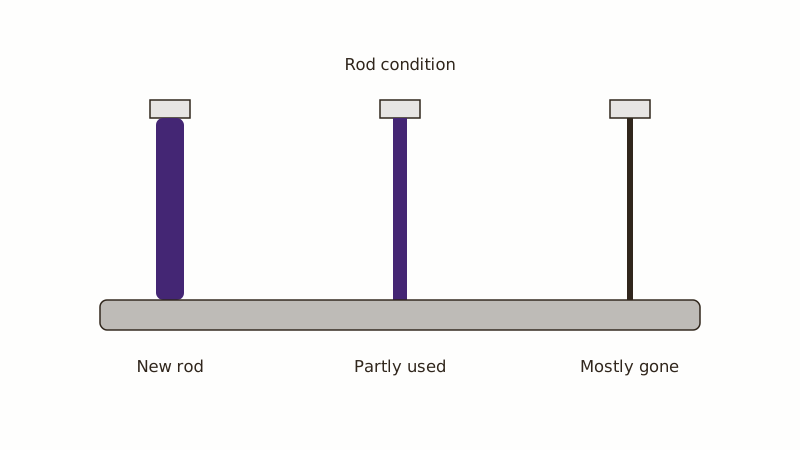
What a worn rod looks like: thin, pitted, or reduced to bare core wire along long stretches. What a healthy one looks like: thick, with a rough coating of scale. Write the date of each inspection on a piece of tape stuck to the tank, because nobody remembers.
Changing a rod at the right moment can add years. Once rust has started through the steel, a fresh rod is too late: prevention only.
Does Ontario water chew through rods quicker?
Maybe, and nobody can promise it from a hardness number alone. What is firm: supply sources around here differ, so neighboring houses can see different results. Ontario's 2025 report gives hardness averages from 91 to 177 ppm depending on source. Chino's 2024 report lists up to 280 in the city's own wells. Monte Vista Water District, which serves Montclair, listed a 135 ppm average with readings from 90.8 up to 340.
Which of those applies to you depends on your address, so read the utility name off your bill before you borrow anybody's number. Salt-softened water deserves a note of its own, since several manuals advise more frequent rod checks with softeners. Considering one? Compare notes in softener installation and scale prevention.
What symptoms point to a spent rod?
Hot water that smells of sulfur, runs brown, or comes from a tank that pops and rumbles raises suspicion, as does a heater nobody has opened in years. The only certain test is pulling the rod and looking at it.
A smell alone does not convict the rod. Certain bacteria produce a sulfur odor, and a magnesium rod can feed that reaction, so plumbers sometimes swap in a different alloy or a powered rod. Rusty water at the cold taps too means old pipes rather than the tank. If just the hot side runs brown, look at the heater.
Can I tackle the swap myself?
For some, yes, but it is a stubborn one. The rod's hex head crowns the tank, factory torque can be fierce, and a tight closet may leave no space to withdraw a rod that is several feet long. If the fitting will not budge, stop; a cracked tank costs far more than the part.
Sequence, always secondary to the manufacturer's manual: electric heaters lose their breaker, gas heaters get their dial turned off. Shut the cold inlet. Bleed pressure through an upstairs hot faucet. Draw off enough water to drop the level beneath the fitting. A long socket on a breaker bar breaks the hex head free. Fresh rod in, using whatever thread sealant the manual names. Refill with a hot faucet cracked until it spits steadily, and only then restore power or gas.
Gas work changes the picture. On a gas heater, anything touching the burner, venting or gas valve is not casual. If gas is in the air, get out first. The number to dial once you are clear is 1-800-427-2200 (SoCalGas). And permit-triggering work must go to a California contractor license holder.
Should I skip the rod and buy a new heater?
Often, yes, if the tank is elderly or is already weeping from a seam or the bottom edge. A rod does nothing for that. Weigh the age against the repair: how often a heater ought to be replaced sets expectations and replacement cost frames the money.
Rods are not universal. Some tanks have a second one in the outlet, some use none, and tankless units contain no rod at all, which feeds into the tank versus tankless debate. While the heater is being looked at, two other cheap protectors deserve attention: the pressure relief valve (replacing the valve) and the thermal expansion tank (expansion tank swaps).
How do I book a visit for the swap?
Phone or send the form with the heater's age, capacity, fuel and symptoms. Someone local comes to look at the rod and the tank. Have the quote on paper, with the rod, other parts and labor each on a line, and have the contractor's license number checked against state records. Phone hours: weekdays, 9am to 5pm.
Expect honesty if the tank is a lost cause. Begin on the quote page; or wander through the Chaffey Pipe and Drain home page. A price mentioned on the phone is a guess; only the paper quote handed over after a visit commits anyone.
Common questions
How long can a rod go before replacement?
It swings with water chemistry, tank size and temperature, so no single figure is honest. Manuals generally say to inspect periodically and replace when mostly used up. Softened or aggressive water burns through it faster. Check your own manual, and keep a dated note on the tank of each inspection.
Which types of rod can I buy?
Magnesium is the common choice and protects well. Aluminum is another option, sometimes chosen where odor is a problem. Powered rods use a tiny electric current and are not consumed. A plumber can recommend one for your water. Make sure the length and thread fit your tank so a warranty is not put at risk.
Will a new rod cure the sulfur smell?
Possibly, but it is no sure thing. Bacteria in the tank cause that odor, and a different alloy, a powered rod or a tank flush sometimes helps. If the old rod looks fine and the smell lingers, ask a plumber to test and treat the tank rather than guessing at parts.
Could a bad rod make the tank leak?
A used-up rod does not leak, but afterward the tank steel corrodes faster and may eventually give way. A drip at the rod fitting itself usually means a damaged thread or loose seal. Seepage through the tank wall means it is time to price a new tank.
Does replacing it affect my warranty?
Some makers tie coverage to proper maintenance, and a rod change done wrong could create a dispute. Read the warranty terms and keep receipts. Have whoever does the job write down what was installed and when, and look at the maker's instructions before starting.