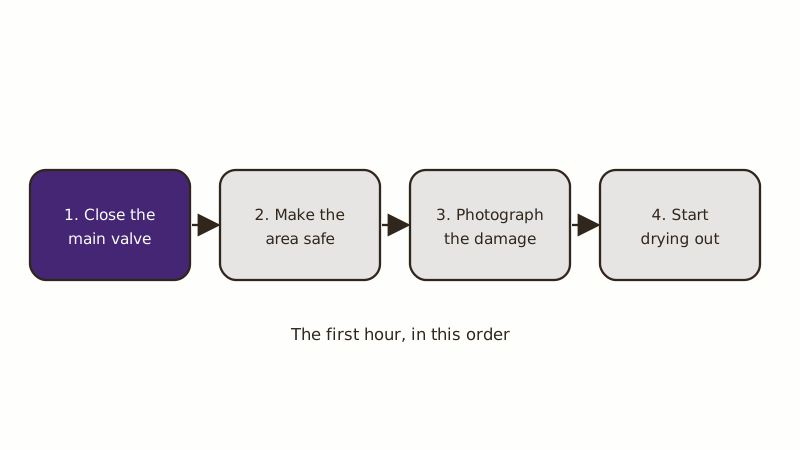
Close the main valve, make the area safe, photograph the damage, and start drying. A plumber repairs the pipe; the soaked house is a separate job, usually involving drying specialists and your insurer. How the pipe itself gets found and fixed is in the leak plumber guide, and this page follows the water.
Speed decides the outcome. Wet materials that dry quickly are often saved, and the same materials left damp turn into mold and rot. What follows is ordered by urgency.
What are the first sixty minutes for?
Closing the main valve comes first. Power to wet rooms can be cut at the breaker panel, but only when you can get there without standing in water. Stay out of rooms where outlets or appliances are submerged, move people and pets to dry space, then ring a plumber, and open a claim with your insurer.
Never wade near electrical equipment. A wet panel means staying away and calling the utility and an electrician. With the main off, open the lowest faucet to relieve line pressure. Record photos and video before touching anything, because they support the claim. Lift valuables, roll up rugs and pull furniture off soaked floors to limit staining and swelling. Not sure it was a burst at all? Telling a burst from other leaks helps.
What does drying out properly take?
Get the standing water out first, using a wet vac or a pump. Then keep fans and dehumidifiers running around the clock, opening windows when outdoor air is dry. Wet carpet pad should go, since it dries slowly and holds moisture against the floor. Look behind baseboards and in wall cavities, because a dry surface can hide a wet interior.
For significant flooding, drying companies use moisture meters and thermal cameras to find wet spots you cannot see, and industrial dehumidifiers that run for days. A wall that looks fine can stay wet inside the cavity, and that is where mold begins. The EPA's advice is blunt: repair plumbing leaks promptly and make sure everything gets fully dry. Do not paint or re-cover wall surfaces until a moisture reading says the framing is dry.
What gets thrown away and what can be saved?
Porous materials that stay wet are usually discarded: carpet and pad, ceiling tiles, insulation and soaked drywall. Per the EPA, carpet, ceiling tile and the like might be discarded when mold sets in. Solid wood, tile and metal can often be cleaned and saved if they dry fast.
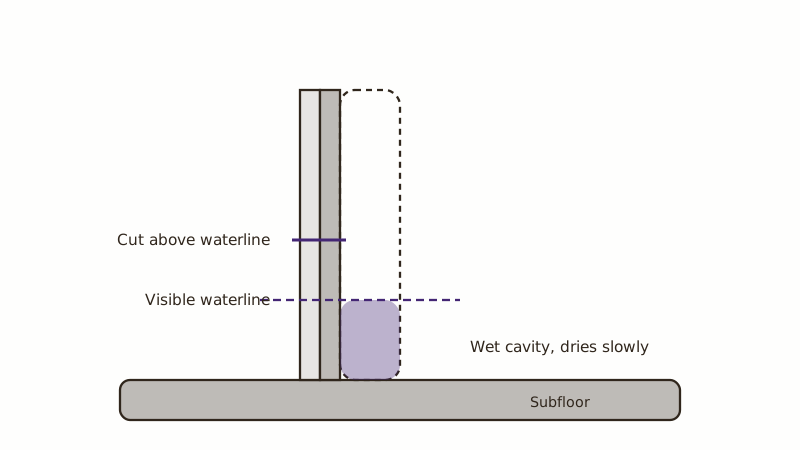
Sagging, crumbling or musty drywall comes out, and the cut generally extends above the visible waterline. Keep what you discard in the photos, since insurers ask what was lost. Local housing stock changes the picture: older homes near downtown Ontario and the Euclid Avenue historic area may have plaster walls and old wood floors with different drying behavior, while newer drywall-and-slab homes in Ontario Ranch and The Preserve dry mostly on the drywall side. Ask the drying company which approach fits yours.
How do I handle the insurance claim?
Phone the insurer early, ask what applies, and save every receipt. Plenty of policies pay for abrupt water damage yet exclude the pipe that failed or damage from gradual seepage, and slab leaks follow their own terms. Check with your agent before hiring a large vendor, because some insurers specify who may do the work.
Hold on to damaged items until the adjuster looks or you have photos and an inventory. Keep invoices from the plumber, the drying company and any emergency purchases. Typical policy wording is covered in burst pipes and insurance, with the foundation case in slab leaks and coverage. A plumber's invoice that states what failed helps a claim. A tenant writes to the landlord straight away.
When does water damage become a mold problem?
When materials stay wet too long, or a stain, fuzz or musty smell appears. The EPA treats a patch under roughly 10 square feet as something many households can clean themselves; bigger patches or heavy water damage point to its separate guidance for larger jobs. Either way, ending the moisture comes first.
Cleaning mold calls for gloves, a mask and goggles, and hidden spots like wall cavities are for a professional. Dampness that persists after the pipe repair suggests a second leak, so check the meter dial with every fixture off. Slow hidden leaks add up; leaks in an average home waste above 9,300 gallons yearly, per the EPA. The hunt is described in a high bill and no visible leak, and why pipes fail points toward prevention.
Who does the rebuild, and what needs a permit?
A general contractor commonly handles drywall, flooring and finishes, while a plumber handles the pipe. A contractor license goes with permit work in California, and with work totaling $1,000 for parts and labor combined. Pipe replacement and some structural repairs need a city permit.
Ontario's Building office is at (909) 395-2023, and Chino's Building Division is at 909-334-3251. Order matters: the pipe repair and its pressure test come before anyone closes the walls. To head off a repeat, preventing the next burst lists habits. Fill in the quote form to request a plumbing visit, or see what else we line up from the home page.
Common questions
When will the house be dry?
A small wet patch may dry within days under fans and a dehumidifier. Big floods, wet wall cavities and soaked subfloors can run a week or longer with equipment, and moisture readings should confirm dryness before walls are closed. Rebuild time then depends on how much drywall and flooring is replaced.
What paperwork do I want from each trade?
From the plumber: what failed and the pressure test result. From the drying company: moisture readings before and after. Both should state scope and price. Check that a contractor license number appears on each document, which larger California jobs require.
Do I have to stand by?
Show up when they arrive, to indicate the shutoff and wet areas, and return for the final walkthrough. Every affected room must be reachable. Unable to stay? A trusted adult may take your place, carrying your photos and the insurer's details.