Which trade do I call about a wet ceiling?
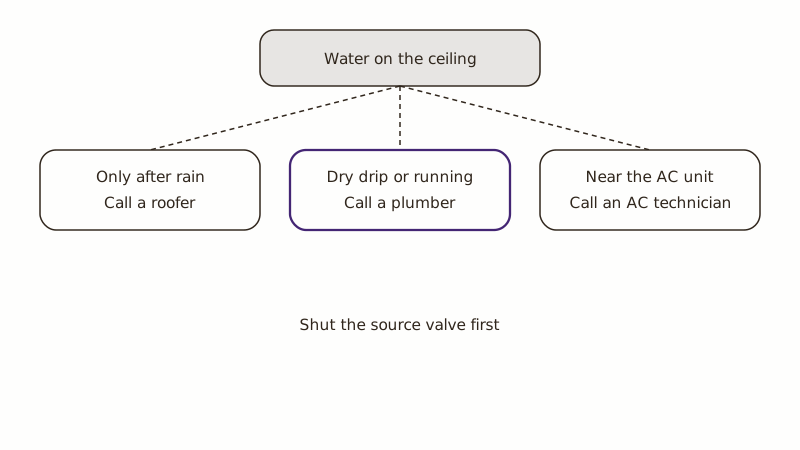
Dry-weather drips, or a bathroom, kitchen or laundry overhead, or water you can hear running: plumber, and the leak guide explains why. Stains that appear only with rain: roofer. A wet patch under an attic air handler: HVAC company. If you rent or own a condo, the landlord or association hears about it first.
A minute of sorting prevents a wasted visit. Timing is the biggest clue: rain-only points at the roof, while a leak under clear skies points to pipes or the air conditioner. Unsure? Start with a plumber, since supply and drain lines are the usual source and a plumber can redirect you if the cause lies elsewhere.
Everything below concerns ceilings specifically.
What are the safe first moves?
People first, belongings second. Kill the breaker serving that room, keep everybody clear of a bulging ceiling, slide furniture aside and set out buckets. If you know where the water source is, close that valve or the main. Take photos before anything is cleaned up.
Water and electricity share a ceiling in more places than you expect: light fixtures, fans, smoke detectors, recessed cans. A fixture that is dripping should be treated as energized. Cut the breaker from the panel, standing on a dry floor, and do not touch the fixture. A bulging, sagging ceiling holds a lot of water, and it can drop suddenly, so stay clear.
One tactic is to pierce a bulge with a screwdriver tip so the water drains into a bucket instead of coming down at once. It lowers the risk of a collapse, yet it only makes sense when you stand off to one side with no wiring in the way. Unsure? Wait for a pro.
Which clue points to which trade?
Read the stain. A ring that grows and dries to a brown edge under a bathroom is typically a supply, drain or shower leak. Leaks that only show after rain, tracing back to a roof penetration, belong to a roofer. Water beneath an attic furnace or air handler in summer often comes from a plugged condensate drain, and that is for an HVAC company.
Condensed into a list:
- Room above is a bathroom, kitchen or laundry: plumber. Suspects are a shower pan or valve, tub overflow, toilet seal, dishwasher or washer hose, or a supply line.
- Drips that track the weather: roofer. Watch the pattern during and just after storms.
- Stain under an attic unit, worse in heat: HVAC. A clogged condensate drain can overflow.
- Pipes run through the attic or wall above the stain: plumber.
- Second story of a condo or apartment: start with the landlord or association, because the source may be a neighbor's unit.
- Water heater in the attic: plumber, with gas smells handled as a separate emergency.
The page on ceiling water leaks goes deeper on diagnosis, and plumber for shower leak covers the top cause.
What changes if I rent or share walls with neighbors?
Put it in writing immediately to the landlord, manager or HOA; a shared line or the unit upstairs may be the source. In a multi-unit building you usually cannot repair a neighbor's pipe or a common riser. Ask who is responsible for diagnosing the source and who pays for repairs and damage.
Take photos and video with dates, keep a list of damaged belongings, and keep every message. Ask whether the building's insurance, the owner's insurance or your own renter's or condo policy responds. That depends on the lease, the governing documents and the cause. In a rental, many tenants also notify their own insurer. When the landlord drags, you can still call a plumber to find and stop the water, but check the lease first so you do not create a dispute about who authorized the work.
Is a ceiling leak an emergency?
Moving water, a wet fixture or a bulging ceiling all count. A dry old stain is no emergency, though moisture can feed mold and soften framing, so it still deserves a look. Active leaks only worsen, and the EPA lists household leaks among the big sources of wasted water.
Close the source valve if you can identify it, or the main if not. Gas is unusual with a ceiling leak but possible around attic equipment; and you notice it, leave the house and phone SoCalGas on its leak line, 1-800-427-2200, using 911 only when people are in danger. The gas problem outranks the water one.
Cold-weather splits are uncommon in a mild climate, so a sudden ceiling leak is more often a failed fitting, a worn washer hose, a toilet or shower seal, or an air conditioner drain than a frozen pipe. For the urgent steps, see emergency plumbing and burst water pipe.
What will the plumber actually do?
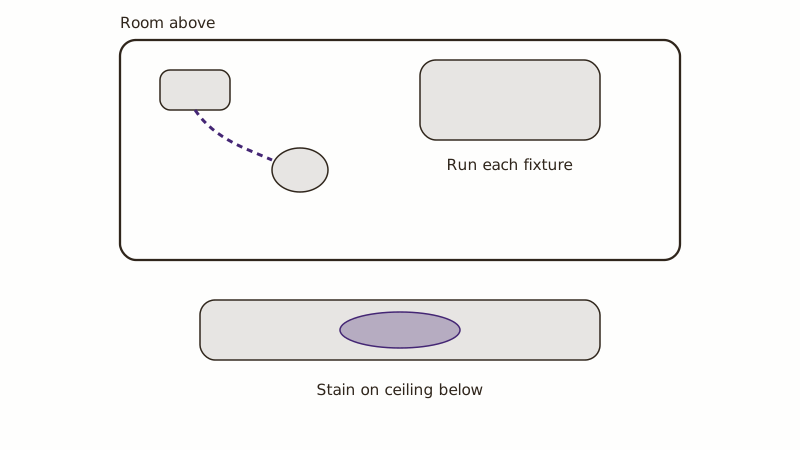
Expect questions about when it began, then a trace upward: the room above, fixtures run one by one, damp insulation, and a moisture reader or heat-sensing camera if the trail goes cold. A small drywall opening is normal, and a pressure test can confirm a supply leak.
Ask up front if tracing the leak carries its own fee, and how they will proceed if the source turns out to be the roof or the cooling system. A sound plumber says so and sends you to the right trade rather than guessing. Ask also who repairs the drywall and paint; plumbers often fix the pipe and leave finishes to another contractor, so line that up separately.
A written quote, not a verbal figure, sets the price. Leak detection costs are discussed on what leak detection costs.
How do I get a visit scheduled?
Send the quote page form or phone with the stain location, what sits above it, recent weather and whether water still flows. Someone local gets set up to visit. Look the contractor's license up with the state, because permit work needs one. Phones pick up weekdays between 9am and 5pm.
A leak that starts at night calls for the safety steps, stopping the water and sending a request for the morning. More services appear on the Chaffey Pipe and Drain home page. Insurers may ask for photos and receipts, and burst pipe coverage covers the claims side.
Common questions
May I just repaint over the discoloration?
Not before the source is found and fixed. Fresh paint over an active leak bubbles and the stain returns, and trapped moisture grows mold. After the leak stops and the spot dries fully, roll on a stain-blocking primer and repaint. Anything less and the brown ring tends to bleed through the new paint.
Should I call my insurance company before a plumber?
If water is still moving, the plumber comes first because limiting the loss matters most. Tell your insurer soon after, photograph the damage and ask what they need before repairs. Coverage varies by policy; check yours, and keep wet materials until the insurer says otherwise.
How do I tell a roof leak from a plumbing leak?
Watch the calendar. Roof leaks follow storms and cluster near walls, vents and chimneys. Plumbing leaks turn up on dry days and often coincide with a shower or the washer running. A moisture meter and an attic inspection settle the question, and a plumber is the safe first call when you are unsure.
Is mold a risk after a ceiling leak?
It can, mainly when materials stay damp past a day or two. Dry the area quickly, use fans and ventilation, and remove soaked insulation or drywall that cannot be dried. If you see widespread growth or anyone has health symptoms, get a professional assessment before you disturb it.
Will the plumber fix the ceiling too?
Most plumbers repair the pipe and cut only what they must to reach it, while drywall, texture and paint usually belong to a different trade. Ask beforehand who handles them, get that price on paper, and make sure the plumbing is finished and tested before the ceiling is closed up.