Which part of a shower fails first?
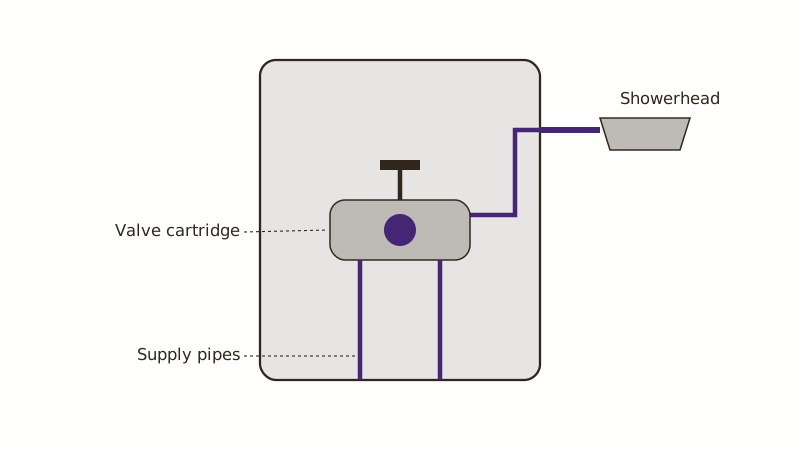
Usually the cheap, visible ones: the cartridge behind the handle, the threads at the showerhead arm, grout and caulk lines, and the drain seal. A pipe buried in the wall is rare and expensive. The place the water appears narrows things fast, so each symptom below comes with a probable source.
Drips with the water off? Think worn cartridge or valve seat. Leaks only while water runs? Think arm threads or a pipe. Wet ceiling in the room below after a shower? Think pan or drain. The same fixture family includes kitchen fixtures, and the kitchen end of the family is described in garbage disposal repair.
A quick experiment helps. Run the shower alone and watch the wall. Then run only the tub spout. Then look below the bathroom, in a crawlspace or the ceiling beneath. Slow leaks are inexpensive to cure; long soaks are not, and the EPA reminds households that unfixed leaks waste thousands of gallons.
Which shower fixes can I do on a Saturday?
Head threads, a worn cartridge, a loose handle and cracked caulk are all reasonable. What lives behind tile, under the floor or inside the valve body belongs to a plumber, and part of it requires a permit. When the source is a mystery, stop guessing and let someone open the wall who can also close it.
What most people can manage: thread tape on the arm, a vinegar soak to clear spray holes, a fresh cartridge once the supply is shut at the stop valve, and new silicone where the old has peeled. One more trick: if water comes out of the shower while you wanted the tub spout, the diverter is worn.
Avoid cutting tile blind, with no idea where pipes and wires run. A spongy floor edge, a sour odor or a brown patch below the bathroom that keeps getting bigger means the trouble goes deeper than the trim.
What if the pipe behind the shower has split?
This is urgent. Turn the main valve off, let the pipes bleed out through the lowest tap, flip off breakers for wet rooms at the panel, and then call a plumber. A wall cavity fills fast, and soaked drywall and framing are the real bill, so do not hope it stops by itself.
In this climate the cause is rarely ice. More often a fitting has failed, an old line has corroded through, or a pinhole has finally given way. Houses near downtown Ontario and Euclid Avenue may carry aging galvanized or copper pipe, while newer Ontario Ranch homes have plastic lines whose weak spot is the joint. For the emergency sequence see burst water pipe, and for after-hours help read emergency plumbing.
Take pictures and save every receipt for the insurer. Water audible inside a wall while every fixture is off is a leak; close the main.
Why does the tub have weak flow while every other fixture is fine?
Because the fault lives at that fixture. Likely suspects: a showerhead furred with lime, a stop valve that is not fully open, a worn-out cartridge, a diverter jammed midway. Everything else in the house behaving means the supply is healthy, and the hunt shrinks to one valve and its guts.
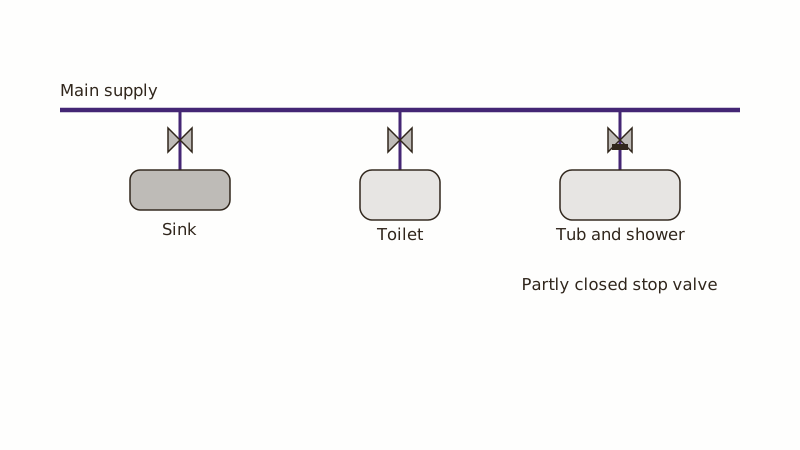
Begin by unscrewing the head and checking for chalky crust or grit; a night in vinegar often clears it. Then compare hot and cold: weak on both hints at the valve or diverter, weak on one side hints at a cartridge or its inlet screen. Local water is hard enough for scale to matter, since the City of Ontario's 2025 report lists hardness averaging 91 to 177 ppm depending on source.
Cartridges are brand-specific, so match the part. Weakness all over the house is another animal; see why pressure falls.
Is swapping a garbage disposal a weekend job?
For many people, yes, when an old unit is being replaced by a similar one. The mounting ring, sink flange and drain connections follow a familiar pattern. Electrical changes, a flange that will not seal, or drain pipes that do not line up make it harder, and new circuits or pipework may need a permit.
InSinkErator, Glacier Bay and American Standard all mount differently, so the booklet that came with your own unit is the authority over any general guide, this one included. The broad order of work: kill power at the plug or breaker, remove the old unit and its drain, clean the sink opening, seat the new flange on plumber's putty, lock the mount, punch the dishwasher knockout if a dishwasher hose connects, rejoin the trap, then run water and check for drips before flipping the switch.
Safety first: hands stay out of a disposal. Hardwiring should follow the manual and the electrical code. Misaligned traps cause most first-install leaks. Prefer to hand it off? The disposal installation page outlines what the work involves.
Does a mobile home sink follow different rules?
The parts are similar but the pipe is often lighter and the spaces tighter, and the permit path is separate. California's housing department issues alteration permits for mobilehomes and manufactured homes and inspects plumbing among other systems. Swapping a faucet is not the same as moving drains or supply lines, so ask first.
The department's alteration permit page names a permit application form and says its staff handle plan review and inspection. Not every park falls under the same enforcement agency, so check which one covers yours. Tight crawl spaces and thin plastic lines reward gentle handling. For inspection basics, read mobile home plumbing inspection.
How do I get the shower looked at?
Use the form or the phone to say where the water appears, whether it leaks with the shower on or off, and whether the room below is stained. A local plumber gets sent over; whatever license number is offered can be verified through the contractor board website. We pick up weekdays between nine and five.
The written quote should split out diagnosis, parts, labor, tile or wall repair and any permit. Easiest start: the quote page; wider view: the Chaffey Pipe and Drain home page. Phone pricing is guesswork, and the figure that counts comes only after the shower has been inspected.
Common questions
Wall leak or trim leak: how do I tell?
Look behind the wall for stained or bubbling paint, listen for water when everything is off, and sniff for mustiness. A water meter dial that keeps moving while every fixture is shut points to a hidden leak too. A plumber pressure-tests the lines and reads moisture with a meter; close the supply if you suspect the leak is live.
Will an old shower leak harm the floor under it?
It can. Water that slips past grout, the pan or the drain collects in the subfloor and framing, leading to rot and mold over time. Soft spots, caulk that keeps failing and a lingering smell are all early signals, and finding them sooner makes the repair smaller.
Why does the tub spout drip during a shower?
Suspect the diverter first. It is supposed to block the spout when you lift or push it, but mineral deposits or wear stop it from sealing. A fresh diverter or spout usually fixes it, though a strong stream from the spout in shower mode suggests the valve itself needs work.
Does a dripping showerhead matter?
It wastes water and sometimes hints at a worn valve. Where the drip sits at the threads, tape and a snug fit usually stop it. A drip that continues with the water off blames the cartridge or seat, and replacing it stops the loss.
Will replacing the shower valve need a permit?
Cutting open a wall and altering pipes commonly does, while a trim or cartridge change commonly does not. Cities differ, so call the city building counter for your address beforehand. For anything needing a permit, California expects a contractor with a state license, so ask the quoting contractor for their number.