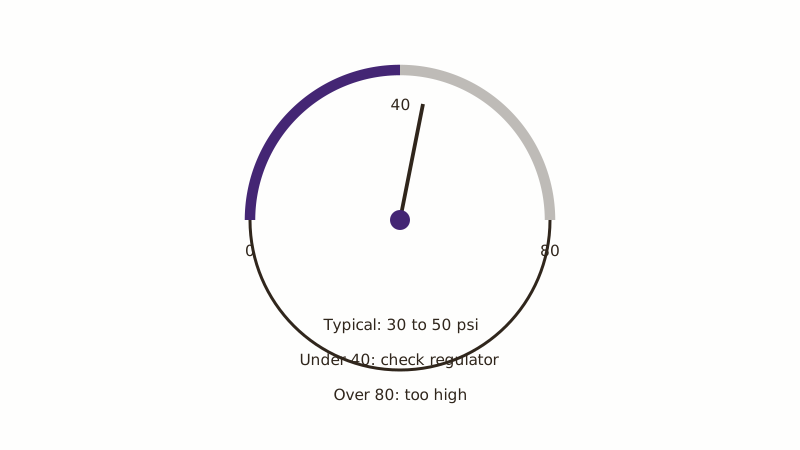
Sort the problem by which taps are weak, because that choice drives the rest. A single fixture means a clogged aerator or valve. Weakness at every tap means something upstream is wrong. Likely causes: a partly shut valve at the entry, a worn regulator, weak street supply, or narrowed pipe. Hot water alone implicates the heater. Our low water pressure help follows the same sorting.
Which taps are actually weak?
Go room to room and open each tap. A lone weak faucet or shower is a local clog, for instance a blocked aerator or showerhead, an under-sink valve left half shut, or a worn cartridge. Weakness at every tap points upstream, while a hot-side-only problem implicates the heater or the hot pipes.
If the drop was sudden, ask the neighbors or the water utility. A water main break, or roadworks, can lower pressure across a block. Inside the City of Ontario, Ontario Municipal Utilities Company supplies the water, and its office line is (909) 395-2600.
What cures one weak faucet or showerhead?
Unscrew the aerator or showerhead and let the tap run bare. Recovered flow tells you mineral grit was plugging the little holes. Soak the part overnight in white vinegar, scrub it and refit it, or buy an inexpensive new aerator. Hard water can be a culprit, and scale prevention covers the numbers.
If a clean aerator changes nothing, open the angle valve under the sink all the way and check that the flexible hose is not kinked behind the cabinet. In a shower the cartridge may be worn; shower pressure goes into the valve.
What do I check when every tap is weak?
Begin with the valves. Open the pair of valves at the entry, the house shutoff and its partner at the meter, all the way; repairs sometimes leave one half shut. Then try the EPA's leak check, which uses the meter alone: note the dial, then leave every tap alone for about two hours, and note it again. Movement means a leak.
Next, hook a gauge up to an outdoor spigot. Roto-Rooter says homes typically run 30 to 50 psi, so a reading under 40 with the main fully open implicates the regulator, the supply or restricted pipe. A sharp overnight drop gets its own page, sudden pressure loss.
Could the pressure regulator be the problem?
Yes. A regulator that wears out or clogs with sediment can hold pressure low, or stick and let pressure rise. A district FAQ says most regulators are preset to 45 to 60 psi. If the gauge reads far below that and the main valve is open, the regulator is a suspect, and replacing it is plumbing work.
To locate it, read where the regulator sits; a swap is explained under regulator replacement. The same district FAQ says the regulator belongs to the homeowner, not the utility, so the utility cannot adjust it for you.
What if the pipes are old or clogged with scale?
Old steel pipes narrow from the inside, which cuts flow and pressure. The USGS says scale can narrow pipes over long periods and lower pressure, and Roto-Rooter says rust in older galvanized pipes narrows them. Homes near downtown Ontario and in postwar tract neighborhoods are likelier to have older pipe.
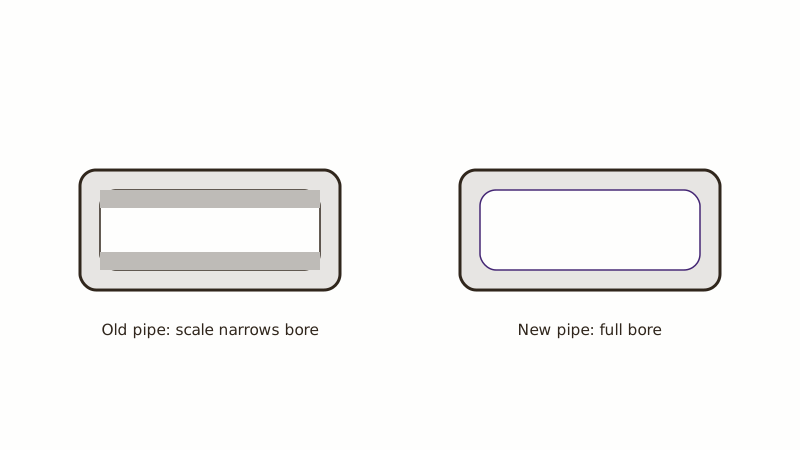
The fix is a repipe, since cleaning does not restore steel. Read galvanized pipe replacement for what that involves. A plumber can confirm by testing flow at several fixtures and looking at a cut section of the pipe.
What about low pressure only on hot water?
Sediment in the heater tank, or a half-open inlet valve on the heater, usually explains it, and hard water makes sediment likelier. Flushing the tank and testing the valves is plumber's work, and corroded hot-water pipes can also restrict flow and sometimes need replacing altogether.
Steps are in low hot water pressure, and the tank itself is covered by water heater repair. With cold fine and only hot weak, start there instead of at the regulator.
Will a booster pump raise my pressure?
Sometimes. When the street supply is weak and the house pipes are sound, a booster pump with a pressure tank can lift pressure for the entire house. No pump will cure a clogged pipe, a tired regulator or a leak, and one can stress aged pipe. Pumps need power and may need a permit, and sizing matters.
Fix the cause first. If a plumber proposes a pump, ask what pressure it will deliver, how loud it is, what it draws, and whether a permit applies. The City of Ontario Building counter, (909) 395-2023, can answer the last point. Chino Hills' own housing element notes low water pressure in Los Serranos and the Sleepy Hollow area of Carbon Canyon.
When does a plumber have to get involved?
For a regulator, a leak, old pipe or a pump. For the work itself, California expects a contractor license at the $1,000 mark for labor plus parts, and always where a permit applies. Request the license number, a scope in writing, and confirmation that pressure was measured before and after the work.
Set out the problem through the quote form with your gauge readings to hand. When the fix is bigger than a part swap, collect two written quotes. A big deposit is a warning, since California limits them.
Our Ontario plumbing home page lists the jobs plumbers come out for.
Common questions
Can this be a quick fix?
Sometimes. An aerator or valve fix takes minutes, a regulator swap a few hours with supply shut off, a pump install roughly a day, and a repipe several days. A plumber can estimate after testing pressure and examining the whole system.
What do I ask when low pressure brings a plumber out?
Ask for the license number, plus a plain account of the method for finding the cause. Request pressure readings before and after, a clear scope of what the price covers, and an answer on permits. Replies on paper let two quotes be compared fairly.
Should I plan to be in?
Yes, so that the shutoff, the meter, the heater and the outside spigot can be reached. Water is off while valves are worked on. If you cannot attend, a trusted adult may let the plumber in once the price is agreed.
What pressure should a house have?
Roto-Rooter reports typical home pressure of 30 to 50 psi, and advises staying under 60. One water district says regulators usually come preset at 45 to 60 psi. Pipes and fixtures risk damage beyond 80 psi, which is the ceiling written into the state's plumbing code.