When a wall-hung heater flashes a code or the shower goes lukewarm mid-rinse, the cause is rarely dramatic. A flow sensor clogged with minerals, a dirty flame rod or a blocked inlet screen accounts for a lot of calls. Book through us and a plumber visits, pulls the unit's fault history and explains the diagnosis without jargon. This page is the specific guide for tankless units, a branch of our wider water heater repair work.
Why does a tankless heater throw an error code or run cold?
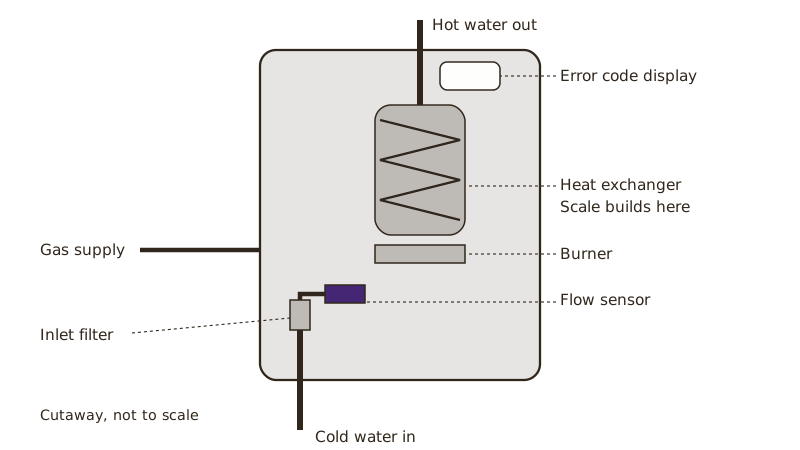
Rule out scale before anything else. Mineral film inside the narrow heat exchanger restricts flow and trips temperature faults that look like a dead unit. After that come worn parts such as a flame rod, igniter or flow sensor, and plain blockages at the inlet screen or the air filter.
Onotto's repair guide blames scale for most tankless error codes, then points at wear parts: a dirty flame rod, a weak igniter. Low demand can also cause trouble. If a fixture draws less than the burner's start threshold, which can be somewhere around 0.4 to 0.75 gallons per minute, the unit may cut out mid-shower.
Not every cold burst is a fault. A short cold slug between two uses of hot water, often called the cold water sandwich, is normal behavior for these units. If the sandwich happens every time and lasts longer than a few seconds, have flow and settings checked.
What does a service visit actually include?
A visit starts with reading the error history on the display, then checking gas or power supply, the inlet filter, venting and the condensate path if the unit has one. The plumber flushes the heat exchanger with descaling solution if scale is likely, tests flow and temperature, and reports back on parts that look worn.
For a gas unit, the visit also looks at gas pressure at the appliance and at the exhaust. Gas work comes with rules. Piping and appliance connections belong to a qualified contractor, and a permit can apply. A sulfur smell near the unit is a reason to evacuate, then phone the utility's gas emergency line, 1-800-427-2200, from the driveway. Use 911 if you feel unsafe.
Request a note listing what was inspected, what was swapped and what was merely observed. That paper trail supports warranty claims later.
How often should a tankless unit be descaled in Ontario?
Annually is the common default. Onotto's guide says to flush every six months when hardness is above roughly 10 grains and about every two years if the home has softened water. The city's 2025 water report puts average hardness at 91 to 177 ppm, depending on source; by our own arithmetic (ppm over 17.1) that is about 5 to 10 grains.
That puts many Ontario homes at the annual end, with some at the upper edge. Hardness varies by address, so a block fed by one source can differ from the next, and your own test strip tells you more than a citywide average. Homes in Chino or Montclair may have their own supplier and their own figure.
Descaling is also a warranty point. Onotto notes that many manufacturers require annual descaling to keep coverage, so check your manual. Our notes on preventing hard water scale cover what else you can do, including treatment ahead of the heater.
When is repair worth it, and when should the unit be replaced?
A younger unit with a dead sensor, igniter or fan is worth repairing. A leaking heat exchanger, a 15-year-old unit with repeat faults, or repair costs climbing past half of what a replacement would cost fitted all point to replacement. A control board failure on a 13 to 15 year old unit is a judgment call.
Federal Building America guidance puts tankless life at up to 20 years, with tank models at 10 to 15. Maintenance decides whether yours gets there. Typical repair prices sit on a separate page, what tankless repairs cost.
If the decision tips toward replacement, weigh tank against tankless first. For installation details, including outdoor placement, see tankless installation.
What should you do when the heater gives nothing?
Run through the basics: power or gas reaching the unit, the breaker, any code on the display, and whether a second tap runs hot. A trickle too weak to start the burner can pose as a failure. If the display is blank or the unit won't ignite, stop and call.
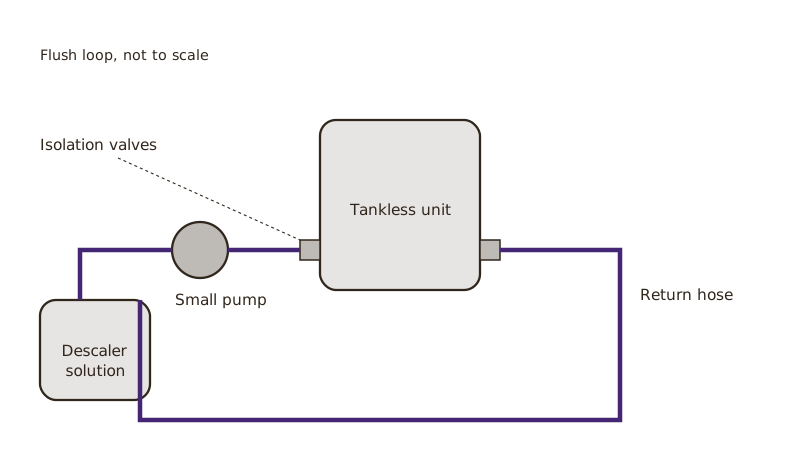
Tankless units that produce no hot water are walked through, check by check, in a separate guide. Home flushing with a pump and vinegar is a common DIY step, but it needs the right hoses and isolation valves, and mistakes can damage the unit. Check the manual first.
Keep in mind that a gas appliance with a vent problem is a safety matter. Never defeat a safety switch, and stop pressing reset on a unit that keeps tripping. For work involving the gas line, read about the rules on gas line work. The full set of services we cover is on our home page.
Common questions
What is the time on site?
Plan on about two hours for a routine flush and inspection. Swapping a worn sensor or igniter adds time when the part must be ordered in. Diagnosing an intermittent fault can take longer. Give the symptom and any code number at booking so the visit is prepared.
What questions help me pick who services it?
Check that they handle your brand, whether the trip charge is credited to a repair, how the quote splits parts from labor, and what warranty the repair carries. Ask them to put the flush procedure and any findings in writing so you have a record.
Is somebody required to be present?
Yes, for the arrival and the handover. A person shows where the unit hangs, okays the scope, and watches it fire at the end. Water and sometimes power or gas will be off for a stretch, so plan around showers and laundry.
Is descaling something an owner can do?
Plenty of owners manage it with a small pump, two hoses and descaling solution that Onotto says circulates for roughly three-quarters of an hour to an hour. Follow the maker's instructions and isolate the unit properly. If you aren't comfortable closing valves or handling gas appliances, hire it out, since a loose hose or valve can leak.
Does a tankless heater need an annual service?
Most makers recommend one, and many tie warranty coverage to it. In hard-water areas the flush matters more, since scale builds faster. A service also catches small problems, such as a loose vent joint or a dirty filter, before they cause a shutdown.