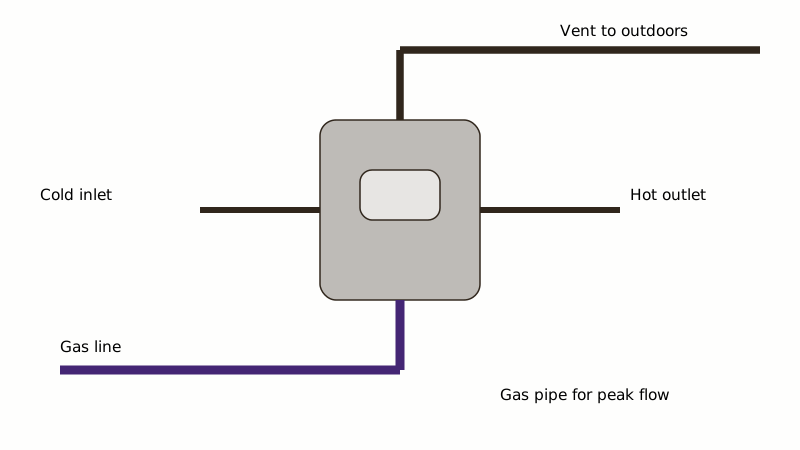
Most of the extra money in a tankless installation goes into what surrounds the heater. A gas model usually wants wider gas piping than the old storage tank used, a different style of vent, a drain for condensate in some models, and a permit. For the wider set of options, start at the hub on water heaters. Here the focus is narrower: what moves the final figure, and what a periodic flush involves.
Is flushing a tankless heater a big expense?
A verified local price for flushing is not available to us, so none appears. A flush circulates a descaling solution, usually white vinegar or a manufacturer-approved product, through the heat exchanger to dissolve mineral buildup, then rinses it. It is a short, routine visit, and some plumbers bundle it with an inspection of the vent, filter screens and error history.
The interval comes from the manual and your water. Hardness in the 2025 Ontario report averages anywhere from 91 to 177 ppm by source, and a given house may receive a blend. Harder water builds scale faster, and scale is what the flush removes. Read the maker's instructions for the interval, and keep the plumber's note of what was done with your warranty paperwork.
Which parts of the job drive a tankless quote?
Gas line capacity, venting, the unit's size, where it is mounted, whether the old tank's location suits it, electrical needs and permit fees. Replacing a tank in the garage with a tankless unit on the same wall costs less than moving to the exterior or adding a new vent run through a finished ceiling.
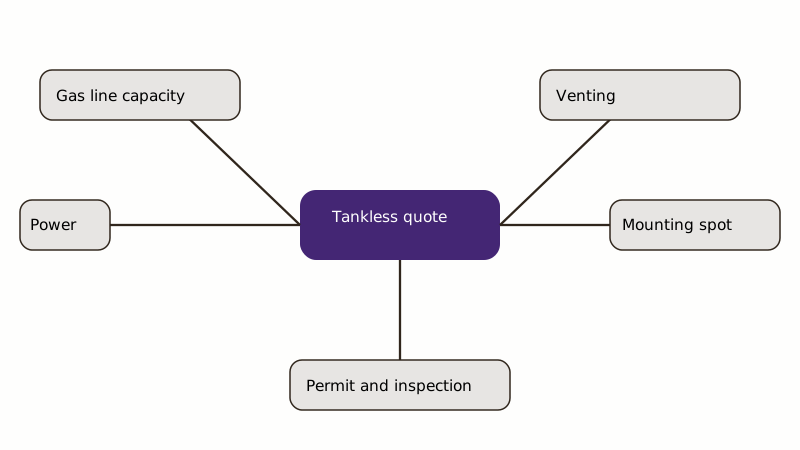
A typical list of line items on a quote:
- The heater itself, sized for the flow you need
- Heavier gas piping, run from the meter or a branch when the old pipe is undersized
- Venting, which may be special stainless or plastic depending on the model
- Water connections, isolation valves for flushing and a pressure relief line
- Condensate drain and neutralizer, for condensing models
- An outlet or circuit, since even gas units need power
- Permit and inspection by the city
- Hauling away the retired tank
The heater is only one line. Everything else is set by your particular house, which is why two bids for an identical model can land far apart. Where a heater is installed matters too, since an outdoor tankless installation trades vent work for weather protection and freeze considerations.
Why would a tankless unit call for new gas piping?
A tankless unit burns gas at a high rate for the few minutes it heats a flow, so its momentary appetite for gas is much larger than a storage burner's. If the existing pipe cannot deliver that, the heater starves and cuts out. A plumber sizes the line from the unit's rating and the total gas load of the house.
SoCalGas delivers gas in Ontario and the nearby cities, and everything beyond the meter is on the owner's side. Changing gas piping is permitted work, and permitted jobs in California are reserved for contractors who hold the state's license. Do not size or extend the line yourself. Ontario's Building office, (909) 395-2023, handles the permit and inspection, and the plumber should say whether it is in the price.
Will one tankless unit keep up with my showers?
The federal Energy Department's page puts typical tankless output near two to five gallons each minute, gas-fired models outflowing electric ones. Add up what runs at once, such as a shower plus a dishwasher, to see if one heater is enough. Large homes sometimes use two units.
It adds that homes drawing 41 gallons of hot water or less per day may gain 24 to 34 percent in efficiency over a tank, with a thinner margin as use climbs, and it cites a service life above two decades, where tank models are listed at ten to fifteen years. Those are savings and lifespan claims to weigh against the larger up-front bill, not promises about your house.
Does the extra up-front cost pay for itself?
Sometimes, though not for everyone. Savings are largest in small to medium households that use modest hot water, and the long life helps the math. A big family with overlapping showers, or a house needing new piping, venting and wiring, may see a payback much longer than the brochure suggests.
Think about the practical items too: a long pipe run still means waiting for hot water at far fixtures, a tankless unit does not store a reserve if the power or gas goes out, and cold water arrives briefly between uses. Compare with a conventional replacement on tank versus tankless and see how tankless service and repair fits the long-term picture. Treat nothing here as a price promise. The figure that binds is a local plumber's written quote, produced after the gas line and the wall have been inspected.
What belongs in a good tankless quote?
Look for the model name with its flow and input ratings, the gas pipe size and whether it is being upgraded, the vent and condensate details, the permit and inspection, and what becomes of the old tank. Find out if wall and ceiling patching is included and who does it.
It also helps to know the water side. Hard water is common around here, and service valves that make flushing possible are worth fitting on day one. On emissions, the regional air board voted in June 2025 against rewriting its water heater rules, numbered 1111 and 1121, so no zero-NOx requirement is pending to sway the choice.
Common questions
Is a tankless swap a one-day job?
Where the heater sits in the old spot and the gas pipe is already big enough, one day can do it. Moving the unit, running new venting or upgrading the gas line takes more time, and the inspection has its own schedule. We do not set times, since the plumber gives a window after seeing the house.
What should the installer be asked up front?
Learn who applies for the permit, why that gas pipe size was chosen, which vent material goes in, whether flushing valves are included, and who repairs the walls. Check the contractor's license status with the state board, because permitted work requires one, and remember California limits deposits on home improvement jobs. Request the answers on paper.
Should I stay home for installation day?
Plan to be around when the crew arrives to confirm the heater's spot and approve the scope. Utilities get shut for stretches, and the inspector may need to enter. If you cannot be, settle access and a contact person first.