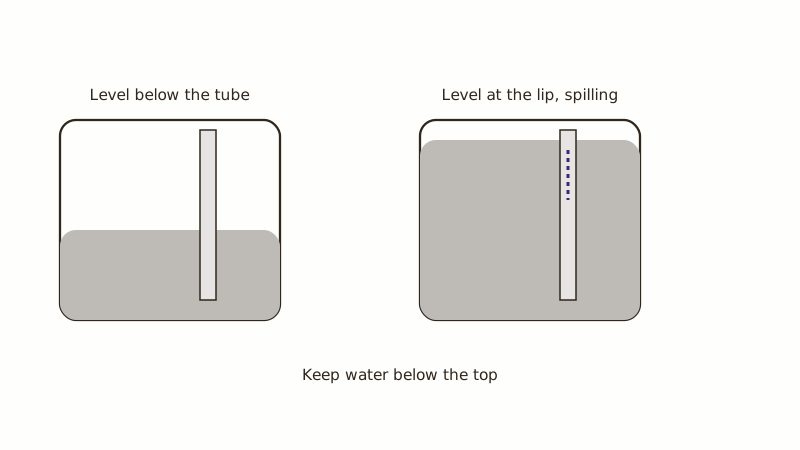
Lift off the cistern lid and spot the open-topped pipe next to the flapper. Think of it as a fire exit for water. A fill valve that jams open sends its surplus down the pipe to the bowl, sparing the bathroom floor. Constant hissing, or a tank that keeps making up its own water all day, often means water is spilling into that pipe because the level sits too high. See our wider toilet repair help for the rest.
What is the overflow tube for?
It is a standpipe, open at the top and joined to the bowl drain. Fluidmaster describes it as a defense against water leaving the tank. Whenever the fill valve sticks, surplus water leaves through the tube and nothing runs over the rim.
At a healthy level, the surface sits below the opening. Once it rises to the lip, water trickles down continuously, the fill valve keeps making up the loss, and you hear the hiss. That is the typical fault, and a broken tube is the exception, so inspect the level before you spend money on parts.
Is water actually running into the tube?
With the lid off and the bathroom quiet, watch the lip of the tube. Water rippling over the lip shows the level is too generous. A surface that sits lower but still drops and refills every few minutes points at a leaking flapper, which is another part entirely.
A dye test tells them apart. The EPA suggests dropping coloring into the tank and holding off flushing for ten minutes. Tint appearing in the bowl means a leaky flapper. A clear bowl combined with water spilling into the tube means the level needs adjusting. For the flapper side, read about a toilet that keeps running.
How do I bring the water level down?
Find the adjustment on the fill valve. Cup-style floats slide up and down the valve with a clip to squeeze; some valves use a screw on top, and older ones have a float ball on an arm that you bend gently. Lower the float, flush, and watch where the water stops. Plenty of guides aim for roughly an inch under the lip, or for a waterline molded into the tank.
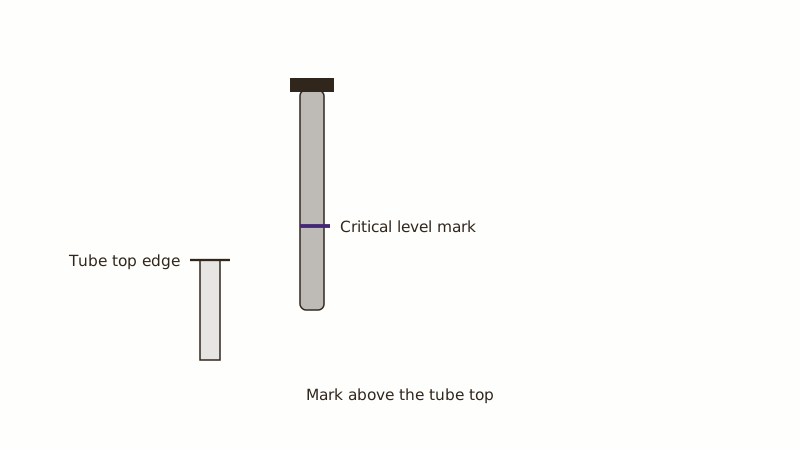
Fluidmaster states a separate rule: the critical level (CL) mark on its fill valve must sit one inch above the overflow pipe's top edge, which stops tank water being siphoned back into the supply. Make small changes, flush between them, and defer to the printed instructions on your own valve.
What if the tube is cracked or wobbly?
Look for a split along its length, or a wet patch where the tube meets the flush valve. A cracked tube dumps tank water into the bowl, so the toilet refills over and over. Many current toilets have the tube formed as part of the flush valve, so the fix is a whole new valve, not a single pipe.
A separate tube that slides into a fitting can be replaced with one cut to length. Fluidmaster says the pipe should end at least an inch below the opening of the tank lever, trimmed if necessary. A way to keep the tank in place is described in replacing a flush valve.
Is the fill valve at fault too?
Sometimes. A valve that cannot shut off even once adjusted has worn out, and a new one is inexpensive. Grit and mineral deposits from hard water foul these valves as well. A valve that holds the lower level after adjustment can stay where it is.
The steps are in fill valve repair, and the other common leak is handled under flapper repair. Keep bleach or chlorine drop-in tablets out of the tank, since Fluidmaster warns they can damage internal parts and may cause flooding.
Should I just call a plumber?
Yes if the tank is cracked, the base bolts weep, the shutoff refuses to turn, or the toilet goes on running after the level was lowered. And if the tube sits inside a flush valve that means lifting the tank, plenty of owners would rather pass that on.
The plumber arrives with parts and handles the supply line too. The state's contractor license rule starts at $1,000 in labor plus materials, and covers permit jobs, which a small toilet repair does not reach. Begin on the quote form. For a larger change, compare what a new toilet costs.
More plumbing help starts at the Chaffey Pipe and Drain front page.
Common questions
Is it an hour's work?
Lowering the level is minutes of work. A fill valve swap takes about half an hour for most people, and a flush valve involves lifting off the tank, which takes longer. If you have never opened a tank, a plumber covers any of these in a single visit.
What would I ask the plumber?
For the license number, the scope of the price and whether parts are covered. Whether the job is an adjustment or a whole flush valve swap. Who takes away the old parts. Put the replies in writing before the visit begins.
Is someone needed in the house?
An adult, yes, to open the door and name the troublesome toilet. The shutoff beneath it is closed during the job, so that toilet loses water briefly. If you are out, a trusted adult can let the plumber in after the price is agreed.
Does a running toilet waste much?
It can. EPA leak guidance cites more than 9,300 gallons lost in an average home each year, and toilets feature among the causes. One tank draining non-stop into the overflow tube can exceed that on its own, so the fix soon pays for itself in lower water bills.
Can a cracked tank be repaired?
Rarely. Epoxy may slow a hairline crack briefly, but a cracked tank is a failure risk and is normally replaced. Hard water leaves crust on parts but does not crack porcelain. If the tank is leaking from the shell, plan on a replacement toilet or tank.