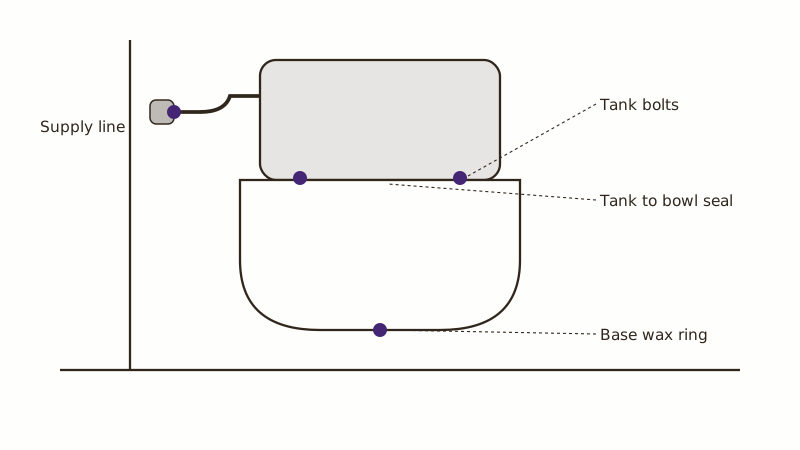
Dry the floor, then press dry tissue against each suspect in turn: the supply fitting at the wall, the tank joints, the bowl bolts and the base. Wherever the tissue darkens first, the leak begins there. A two-minute test like that can save a service call, since each source has its own fix and its own price. Part of our toilet repair hub, this page covers the four sources and who should do each repair.
Can a handyman fix a leaking toilet?
For a small job, often yes. A supply line, tank bolt or flapper is simple enough for a handyman. State rules call for a contractor license at $1,000 in parts and labor, or whenever a permit applies, so a bigger repair goes to a contractor holding a California license. Ask who exactly does the work and what is covered.
A leaking base, a cracked bowl or a rotted floor is bigger: the toilet must be lifted, the seal replaced, and the subfloor or drain flange may need work. That is plumbing, and a plumber who covers drainage services brings the right parts. If in doubt, get the license number and check it with the state before agreeing a price.
Where is the toilet leaking from?
Four places account for most leaks: the supply line and shutoff at the wall, the tank, the joint between tank and bowl, and the base. Supply leaks drip near the wall; tank leaks appear at the bolts or the gasket between tank and bowl; base leaks puddle around the flange, sometimes only after a flush.
A damp toilet with a dry floor may just be condensation on a cold tank. Water sliding silently into the bowl means the tank leaks inside, and a dye test exposes it: add food coloring to the tank and, per EPA, color in the bowl after 10 minutes confirms a leak. EPA's household average is over 9,300 gallons lost yearly.
What causes a leak at the base of the toilet?
The usual culprit is a failed wax ring, the gasket that seals the toilet to the drain flange. It can age out, or a rocking toilet can break it. Loose closet bolts, a cracked flange or a damaged bowl can do the same. A toilet that shifts when you sit is a warning sign.
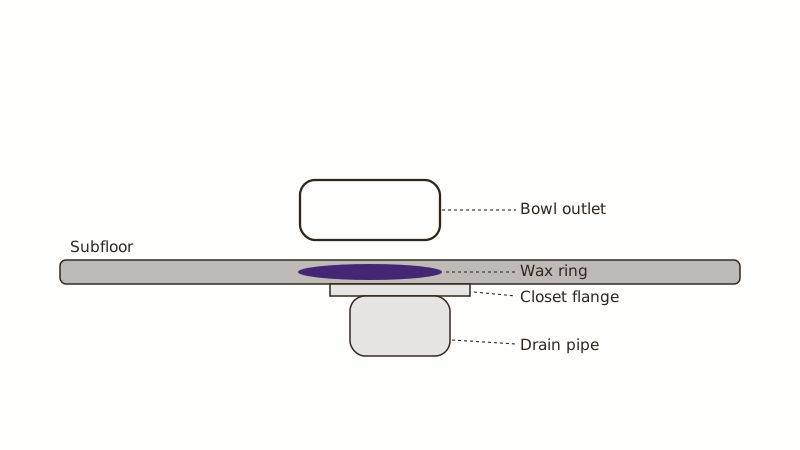
One practical note for older homes: mineral scale can fuse shutoff valves and closet bolts, so a stuck part is common and not a sign of poor work. Stop flushing a leaking base, since water soaks the subfloor, rots wood and can reach the ceiling below. The cure: close the water, drain tank and bowl, lift the toilet, fit a new seal, inspect the flange and reset on fresh hardware. A soft floor must be repaired first. With cracked porcelain, a new toilet may be smarter; see replacing a toilet for pricing.
Can I stop a tank or supply line leak myself?
Usually. With the shutoff closed, a leaking supply line swaps for a braided one using a wrench. Tank bolt leaks need new rubber washers. A drip at the valve stem may just need the packing nut snugged. A shutoff that will not close, or snaps, is plumber territory. Overflow trouble is separate: repairing a toilet overflow tube.
If the tank leaks inside, the usual cause is the flapper or fill valve; our guides to toilet flapper repair and a toilet fill valve walk through them. Toilet leaks are not a gas matter, yet any gas smell in the bathroom means leaving and phoning SoCalGas on 1-800-427-2200 from outside.
When is a plumber the right call?
Pick up the phone for base leaks, cracked porcelain, a stuck shutoff, a soft or stained floor, or a toilet that leaks again after repair. The plumber traces the source, shuts the water, fixes it and rechecks after several flushes.
The plumber should also check the drain connection and flange, because a seal fails faster on a bad flange. If water reached the floor or the ceiling below, ask them to note the damage, and read about a leaking ceiling soon. Many plumbing companies also handle heating of water, so mention any other worry while someone is there. Permit questions go to Ontario's Building office, (909) 395-2023.
To get a plumber out, ask for quotes, and the figure arrives in writing first. Other jobs are on the home page.
Common questions
How long is the visit?
A supply line or bolts is a short visit. A new wax ring takes longer, since the toilet is lifted, cleaned and reset, and floor or flange repairs add more. The plumber can estimate after seeing the toilet and its floor.
What belongs in the quote?
The seal, new bolts and a supply line, a plan for a rotted floor, a test flush afterward, and who does the work. Have all of it in writing and look up the license number with the state before anyone starts.
Is someone needed during the work?
Usually at the start, to open up and show where water appears. Clear the bathroom, say when the leak happens, and keep pets out. Afterward, flush a few times with the plumber beside you and watch the base for drips.
Is it urgent?
Water running steadily, or a leak you cannot stop, means closing the shutoff behind the toilet or the main and calling. A slow base leak is less urgent but still harms the floor. If it flows when you flush, stay off that toilet until it is fixed.
Why does it leak only after a flush?
That tends to implicate the base seal or a loose joint, since a flush forces water past a bad seal. A cracked bowl or a drain problem can also be behind it. After a flush, test the base with dry tissue and stay off the toilet until a plumber looks.