You step into the shower, wait, and the water never warms. With an electric tank, the culprit is nearly always electrical, and it comes down to a short list. This page walks the checks in a safe order, tells you which you can do and which to leave alone, and shows when it makes sense to book a visit. This guide is one branch of our water heater repair section, and the Chaffey Pipe and Drain home page covers everything else.
Where do you look first when an electric heater has gone cold?
Head to the electrical panel. The heater's breaker is normally a paired switch; look for one sitting in the middle or off. Push it fully off before turning it on. A breaker that drops again immediately is warning of a short or a burnt-out element, and that needs a pro.
Then test two taps, one in the kitchen and one in a bath. Hot at one and cold at the other clears the heater and blames a mixing valve or cartridge. Cold at both keeps the heater in the frame.
After any reset, wait. A full tank heats slowly, and a test too early reads like another failure.
What is the red button on the thermostat for?
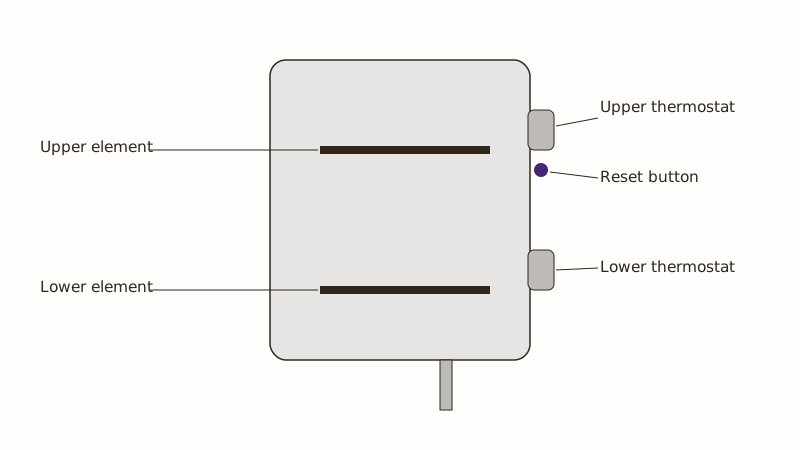
It's a safety cutout built into the upper thermostat. It opens the circuit when water runs too hot, as can follow a thermostat fault. Pressing it again may restore power. If you open the access panel to reach it, the power must be off at the breaker first, since live terminals sit right behind the cover.
Here's the rule we'd give anyone: electricity and water make a bad pair, so don't open the cover with the breaker on, and don't touch wires. If the button springs out again within a day, the cutout is flagging a deeper fault. Hand that to a trade professional instead of pressing it over and over.
A heater that heats and then overheats is a danger, not an annoyance. Hot water can scald, and a failed thermostat can push it much hotter than intended. If you see steam from the relief valve pipe, shut off power at the breaker and call right away.
How do heating elements fail?
Inside a typical electric tank you'll find two screw-in elements stacked one above the other. They burn out, or scale coats them and shortens their life. Lose the upper one and you may get nothing hot. Lose the lower one and the hot supply runs out in minutes.
Ontario's hardness matters here. In the city's 2025 report, average hardness spans 91 to 177 ppm by source, so your own tap could read differently. Minerals settle as sediment and crust onto elements, one reason heaters wear faster in hard-water areas. Flushing the tank is a common maintenance step, but follow the maker's instructions.
Replacing an element means draining the tank and working with 240-volt wiring. The job itself is described in swapping out a heater element. This isn't a beginner job, and a wrong move can mean electric shock or a flooded floor.
Could the thermostats be the problem?
Yes. Two thermostats, one per element, switch power on and off. If the upper one fails, the lower element never gets power, and the heater goes cold. A thermostat can also stick on, which is the overheating danger noted above. Testing them takes a meter and live-wire knowledge.
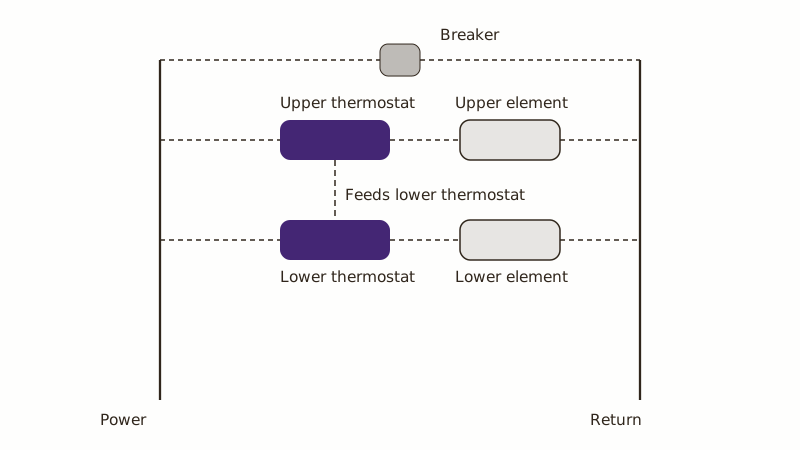
That's the point where most people stop and call. A trade professional meters each element and each thermostat, names the part that failed and says whether a swap makes sense. On an old tank the quote should be frank: putting half a new heater's cost into repairs rarely pays.
Wider causes are covered in why the hot water vanished, and typical lifespan in replacement timing for heaters. If a swap is likely, the page on electric water heater replacement cost helps you plan.
When should you stop troubleshooting and book a visit?
Quit testing if the breaker trips a second time, water is on the floor, something smells scorched, or a reset won't hold. Quit too if the panel makes you uneasy. Each of those justifies booking a visit, because the next step involves live wiring or standing water, and guessing past that point is how small faults become expensive ones.
A leaking tank is a separate matter: if water is pooling, turn off power and the cold supply, and read about how to handle a water heater leak. A failed relief valve has its own guide, relief valve replacement.
If the heater is gone and you can't wait, emergency water heater repair covers urgent calls. Replacing a heater generally needs a permit; in Ontario the Building office is at (909) 395-2023.
Common questions
How soon will the water be hot after a reset?
With power back, a full tank usually needs a few hours to heat, and a large tank needs longer. Avoid judging the result in the first half hour; if it stays cold after several hours with the breaker on, suspect the elements or the thermostats. Don't judge the result in the first half hour. If it's still cold after several hours with the breaker on, the heating elements or thermostats are the likely culprits.
What do I ask a company before booking?
Find out if the trip charge is credited to the repair, which parts they plan to test, and how they'll advise if the tank is nearly finished. Ask for the diagnosis on paper, so you can set it beside a second opinion if the number surprises you.
Must someone be home when it's fixed?
Yes. Plan for an adult to unlock the door, indicate where the heater and breaker panel are, and agree any work before it starts. The heater stays unpowered during the repair and hot water is unavailable for a while, so schedule showers and laundry for another time.
Is a faulty breaker ever the reason?
Now and then, though a failed element is likelier. A weak breaker can trip without cause or fail to deliver power. If a replacement breaker is needed, that's an electrician's task. Don't swap breakers yourself, because the panel holds live connections that stay energized even when the main is off.
Why does the water go cold quickly after a short shower?
A dead lower element or a thick bed of sediment is the usual reason, because each cuts the amount of hot water available. A cracked dip tube does the same. Someone with a meter can sort out which, and tell you whether mending or replacing the unit makes more sense.