Where does plumbing come into a bathroom remodel?
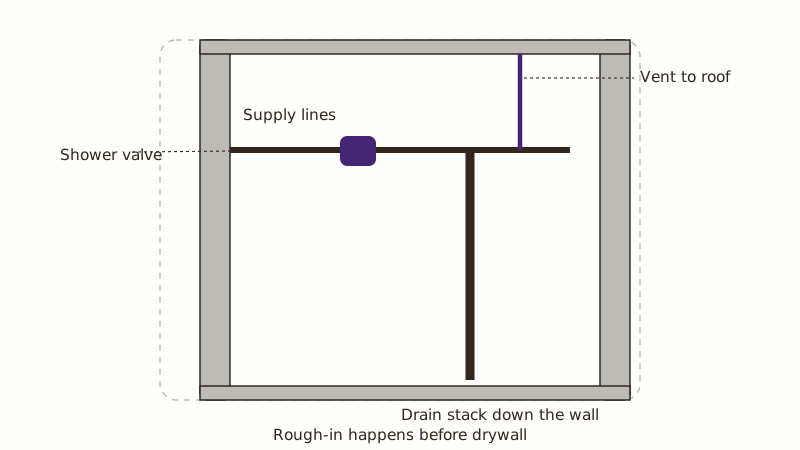
Plumbing shows up twice. First, a rough-in stage after demolition, once the studs are exposed, when supply lines, drain pipes and vents get moved, swapped or capped. Second, a finish stage after tile and drywall, when the toilet, the vanity's faucet and the shower trim get attached. Everything between those visits depends on the rough-in being right.
Planning one? Our other services sit on the Chaffey Pipe and Drain home page, yet for a remodel the real lesson is sequence. A mistake buried behind a finished shower wall costs many times more to correct than one caught before the board goes up. Testing the new lines under pressure before the board goes up costs little and prevents the worst surprise.
Ask whoever does the work for a schedule that names both visits and the inspection in between.
Which decisions should I make before demolition?
Pick the fixtures and the layout first, then the plumbing follows. The rough-in position of a toilet, the type of shower valve and the sink location all depend on the actual product. Moving a fixture across the room changes drain slope, venting and sometimes the structure. Keeping fixtures where they are keeps costs down.
Decide on the toilet, vanity, tub or shower, valve and trim before the plumber roughs in, because a custom order may not match a generic rough-in. A few choices matter more than they look:
- Shower valve type. Pressure-balancing or thermostatic valves reduce scalding when someone flushes elsewhere.
- Where the shutoffs go. Individual stop valves at each fixture save you from shutting off the house for a faucet change.
- Access. A panel behind a tub valve is a small thing that spares you from cutting tile later.
- Water use. California's efficiency rules limit new toilets and showerheads, so read the label on the box instead of trusting a catalog.
Order fixtures early. Delays in a special tile or vanity are common, and the plumber's second visit depends on them.
What does it cost to move a toilet, shower or sink?
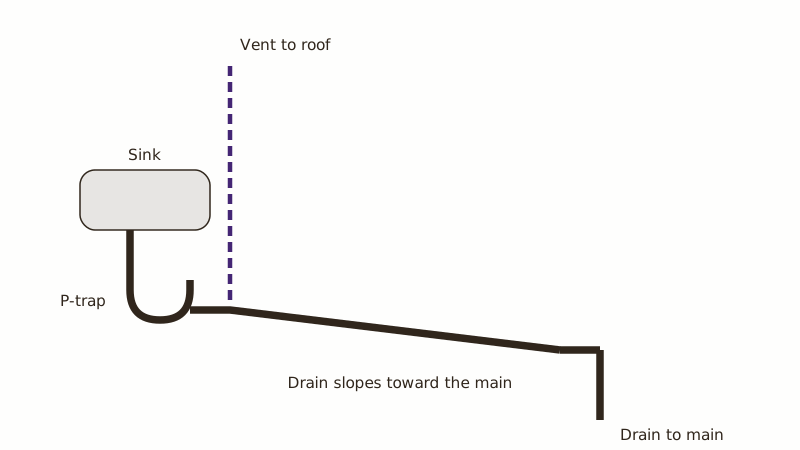
Relocation is the cost driver. Swapping a like-for-like fixture in the same spot is simple. A relocated toilet or shower drain means opening floor or ceiling, re-running the drain at a proper slope, and tying into a vent. On a concrete slab, which is common in houses built from the postwar tract era onward, moving a drain means cutting the slab.
We do not print dollar ranges on this page, because no source we have read prices remodel plumbing in a way that fits this area, and a vague number does more harm than none. What reliably changes the quote: the number of fixtures, whether you move any, floor type (slab or raised), the age and material of existing pipes, whether a new shower valve or a larger water heater is involved, and whether a permit is required.
Pricing that holds arrives on paper, after a visit to your bathroom. Each fixture, the labor, the permit and any wall patching should have its own line.
Does moving a drain mean pulling a permit?
Typically yes: relocating or adding plumbing means a permit, plus an inspector checking the open walls ahead of drywall. A same-spot faucet or toilet swap often escapes that, though cities differ. Before starting, ring the city office responsible for your street.
In the City of Ontario the Building office is at City Hall, 303 East B Street, with a counter phone of (909) 395-2023. Chino's Building Division is at 13220 Central Avenue and can be reached at 909-334-3251, and Chino Hills Building & Safety is at 14000 City Center Drive, 909-364-2780. Which one applies depends on where the bathroom is, not where the contractor works.
Whoever pulls the permit must hold a California contractor license, and you can confirm the number they give you on the state board's website. A homeowner can pull their own permit for some work, but it makes the owner responsible for the result.
What problems turn up when the walls come open?
Typical discoveries: rusted galvanized supply, a shower pan that seeps, subfloor gone soft around the toilet flange, drains with no real vent, and cast iron pitted through. None of these are rare in older houses, and they are better discovered now than after a new floor is in.
Older places by downtown and Euclid Avenue may have steel or copper bringing water in, plus cast iron or clay taking it out. Montclair and Chino neighborhoods built after the war may pair copper supply lines with cast-iron drains. Newer homes in Ontario Ranch may well have plastic supply and drain lines, and the issues there are more about workmanship at fittings than corrosion. If steel pipe turns up, replacing galvanized lines explains the options.
Plan a contingency for surprises. A remodel budget with no cushion turns every discovery into an argument.
What are some common bathroom plumbing problems?
Bathrooms keep repeating the same complaints: toilets that run or wobble, sluggish drains, a shower seeping into the wall, weak flow at one fixture, a dripping spout. Each is cheaper to fix before finishes go in. The remodel is also your chance to replace worn supply lines, cartridges and stop valves.
Several have their own pages. Shower leaks are handled on their own page, as do running toilets and surprising water bills. Wall leaks matter because they stay hidden; the EPA counts leaks among household water wasters that quietly add up, and bathrooms are a common starting place.
Gas seldom enters a bathroom job, apart from a water heater or wall heater nearby. Should that equipment ever smell of gas, evacuate; the SoCalGas line, 1-800-427-2200, should be dialed from outside the house.
How do I choose who does the plumbing?
Collect license numbers and check them. Insist on a written contract, which California requires from $500 up for home improvement. Line up two itemized bids. Deposits are limited by California law, which makes a request for the bulk of payment upfront a red flag. Look at customer reviews on independent sites, since we do not publish any here.
Find out how the plumber works with your tile setter, what the plan is for hidden damage, and who books the inspections. Also ask about maintenance afterward: where the shutoffs are and how to reach the access panel. A good plumber labels them.
To start, describe the project on the quote page; someone local will be sent to look at the room. Weekday phone service runs 9am to 5pm. The final price lives in the paper quote delivered after the visit.
Common questions
Can I remodel the bathroom without moving the plumbing?
Yes, and it is the easiest way to control cost. Keep the toilet, sink and tub or shower where they are, and swap fixtures, valves and trim. Even then the plumber may replace old stop valves and supply lines while access is easy. A permit is not always required for like-for-like swaps, but check with your city.
Should I replace the supply pipes during a remodel?
If they are old galvanized steel or corroded, yes, while the wall is open. For copper in good condition, a plumber can test and decide. Replacing a short run now is much cheaper than opening a finished wall later. Ask for the condition of the pipes in writing.
How long does bathroom plumbing take?
A standard bath often needs a day or two at rough-in and a few hours at finish, though moves, slab cutting and surprises add time. The bigger delays tend to come from inspections and from other trades. Ask for a schedule that shows both plumbing visits.
You will be told, shown, and asked to approve extra work. Rot, mold and pipe damage can change the scope, and this is where a written change order matters. Take photos, do not let the walls be closed until you have seen the problem, and keep every document.
Is it smart to supply my own fixtures?
Sometimes, but check the rough-in dimensions and make sure the plumber is comfortable installing what you bought. A mismatched fixture can cost more in changes than it saved. Ask the plumber before you purchase, and keep the boxes and receipts until the work passes inspection.