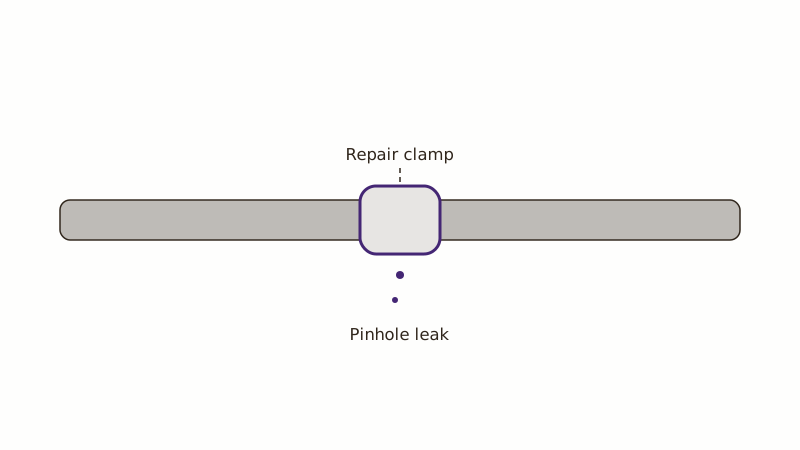
Spray or seep, the first move is identical: stop the flow. Shut whichever valve feeds the pipe and what remains is a calm repair rather than a mop-up. If the pipe is a lost cause, the Ontario plumber home page explains how we send help, and the quote form collects the particulars. Otherwise, follow the steps below, which run from emergency to permanent.
Spray or seep: what do I do first?
Close the closest shutoff valve, then crack open one tap on the lowest floor so the pipe empties out. No local valve? Go find the main, usually beside the meter where supply enters the lot. Repair parts will not grip a wet, pressurized pipe, so getting it dry is half the job.
Look where the water lands. Drips heading toward an outlet, a light fitting or an appliance mean flipping that circuit off at the panel before anything else. Then mop up and study the spot for a minute: a hairline crack, a failed joint and a split fitting each want a different fix.
What stops a leak on plastic pipe until the plumber arrives?
The usual stopgap is a lined repair clamp, backed up by wrap-on sleeves and two-part epoxy putty. A clamp copes with a pinhole or a thin hairline crack on a clean, round stretch; putty copes with pinholes at fittings if the plastic is dry and scuffed. Think of all three as an overnight bridge, not a repair.
A clamp squeezes, so the pipe must be round enough to seat evenly, and brittle old plastic may crack further under that squeeze. If the split runs more than a couple of inches, plan on cutting the damaged piece out. After fitting, open the supply slowly and look for weeping before you walk away.
Can you join pipe ends without welding?
Plastic pipe does not need welding. White or gray PVC is solvent-cemented after a primer, PEX gets crimp or clamp rings, and many modern fittings just push on and grip. To swap a cut-out section, either a slip-on coupling or a push-on repair coupling does it with no flame at all.
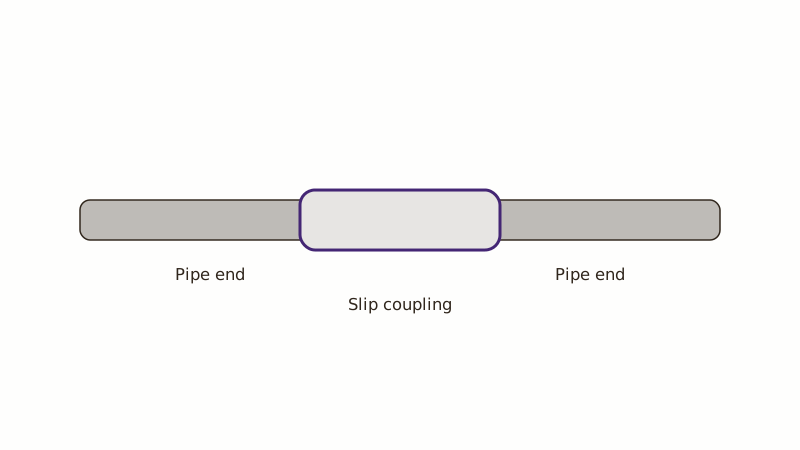
Matching is the part people miss. PVC, CPVC and PEX each have their own joining method, and cement made for one may fail on another. Read the print along the pipe wall first. A coupling that looks right but suits another material may hold a week, then let go inside a wall.
Does a clamp hold two pipe ends together?
No. A clamp wraps one pipe over a damaged spot; it does not join two ends. Joining takes a coupling sized to the outside diameter, push-fit or a pair of fittings with a short length between. A hose clamp on bare pipe will not hold a pressure leak and may crush a thin wall.
For a quick patch on a straight leak, a gasketed clamp is fine. Tighten it evenly and go back to it in sixty minutes, because the rubber beds in. Then book the permanent fix for the next day. A patch left in place for months tends to let go in the dead of night.
What changes outdoors or under a mobile home?
Sun, impact and shifting soil kill outdoor plastic. Irrigation-style pipe is the easy case: cut away the cracked length and splice in a coupling. Under a manufactured home, freezing is rarely the issue here, but lines often run low and exposed, and a wet patch by the foundation can hint at a bigger hidden leak.
A household that ignores its leaks pours away upward of 9,300 gallons in a year, per the EPA. The agency's quick check needs only the meter: jot down the reading, leave every tap shut for two hours, and read the dial again. If the number has moved, water is escaping. Hidden leaks beneath a house or slab are plumber territory, and the hub for leaks and burst pipes explains how they are traced.
And if the drip is a tap, not a pipe?
Suspect the cartridge, washer or a rubber O-ring first. Turn off the small valve beneath the sink, strip the handle, and carry the worn part into the nearest hardware shop to find its twin. A drip at the point where the supply hose meets the valve is often a tired rubber washer or a loose nut.
Plastic threads strip easily, so hand-tight plus one quarter turn with a wrench is the ceiling. Fit a new flexible supply hose rather than cranking harder; they are cheap. A shutoff valve that itself drips when turned should be left alone, because the stem can snap. More detail sits in our notes on mending a dripping faucet.
How do I know the plumber is any good?
Start at the CSLB website, where anyone can look up a license. Under state rules a license is needed when the bill for labor and parts reaches $1,000, and also if a permit applies. Then ask for an estimate that spells out the task, the parts and the total. One that just reads "fix leak" tells you nothing.
Watch conduct before the job. A good plumber explains the failure, proposes a fix and shrugs when you want another price. Be wary of someone demanding most of the money first, given California limits deposits, or of anyone who will not commit the price to paper.
What do I call the person who fixes water pipes, and where is an honest one?
A plumber, listed by the state contractor board under plumbing contractors. On a business card, look for a license number that you can confirm online. Mandarin speakers often say 水管工 or 管道工. To find an honest one, gather two prices for the same scope, check both licenses and ask neighbors in Ontario, Chino or Montclair who they used.
Honesty shows in practice. The plumber shows you the failed part, quotes a price before starting and never calls a permit unnecessary when the city says otherwise. For gas or main line work, the City of Ontario Building counter, (909) 395-2023, can say what applies. Our service area list shows where we send plumbers.
Common questions
Is it a fast repair?
On a reachable pipe, a clamp or coupling swap tends to take around an hour after draining. Cement then needs time to cure, adding a few hours. Work behind drywall, below a slab or along an aged run stretches further, and the plumber can usually estimate after looking.
What should be asked first?
Request the license number, an explanation of how the price is built up, what happens should the leak come back, and who patches any wall or floor they open. Ask if a permit applies. Have the replies written down; those few questions reveal a lot.
Should someone be at the house?
Generally, at the beginning at least, so the shutoff and the leak can be pointed out. A relative or neighbor can step in if the price is settled on paper first. Clear out the sink cabinet or the floor around the toilet beforehand.
When is a plastic pipe leak an emergency?
Any time the water will not stop, sits near wiring or appliances, or if a ceiling is taking the soak. Close the main, kill power to the wet zone where that is safe, and phone. A gas smell is separate: get outside first, then call the SoCalGas leak line.