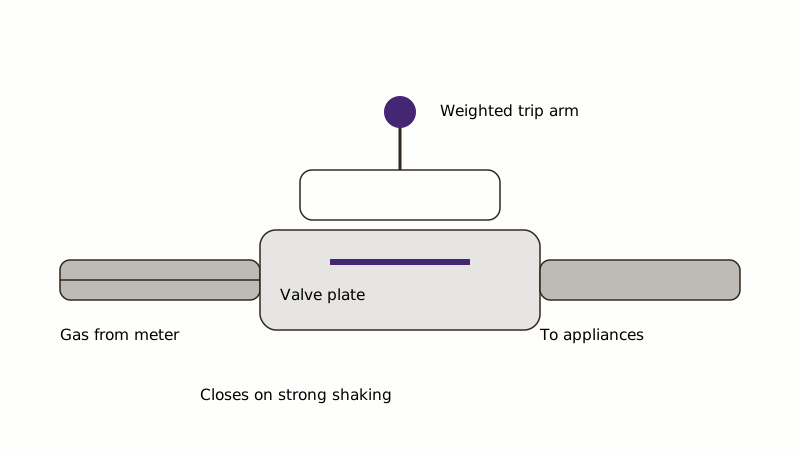
Fitting a seismic gas shutoff means cutting into the gas line, and in California that is work for a contractor, usually under a permit. So the useful DIY job is preparation: learn whether your city expects a valve, pick a type, and line up a contractor. More on the whole system sits in the gas line hub, and booking starts at the home page.
Does your house have to have an earthquake gas valve?
For most existing homes we could not find a statewide rule that forces one, but local rules exist and sales or permitted remodels can trigger them. Whether Ontario, Chino, Montclair or Upland asks for a valve on your address is a question for that city's building division.
Skip the internet's opinions here, ours included. Phone the building counter. City of Ontario Building answers at (909) 395-2023, and Chino's Building Division at 909-334-3251. Ask the exact question: "Does a seismic gas shutoff apply to my address at sale, remodel or water heater change?"
Take notes on the answer and who gave it. New construction and big additions are more likely to bring the requirement than a quiet resale, but the counter decides, not the internet.
How does the job go when a contractor does it?
Expect five steps. A walk-through to see the meter and the piping. A written scope and price. A permit, where the city wants one. The installation, including leak testing every joint. Then an inspection, where the city confirms the work. Appliances relight afterward, sometimes with a pressure test first.
Gas goes off during the visit, so plan for no gas range, no gas furnace and a cold gas-heated tank until the contractor restores service. Pilot lights on older appliances may need relighting, which the contractor should do or supervise.
Ask for the make and model of the valve and a copy of its instruction sheet before the crew leaves. Reset instructions matter, because in a real quake you want to know whether the valve has done its job.
Tied to this: emergency gas shut-off valve guidance goes through what to do when gas is already flowing wrong, and gas line installation rules explains the code layer.
What does a seismic shutoff valve actually do?
Its job is to close the gas supply when shaking crosses a threshold, so a snapped pipe or a toppled appliance has no fuel to feed a blaze. A typical seismic valve contains a mechanism that trips on motion; once tripped, it stays shut until someone resets it deliberately.
Two broad kinds are sold. One mounts at the gas meter, upstream of the house piping, and protects everything inside. The other sits on a single appliance line. A related device, the excess flow valve, closes when gas surges through a broken line, and is not the same thing as a motion sensor.
Ask any installer which kind they propose and why. A valve at the meter is often what people mean by "earthquake valve," yet the meter is utility equipment, so the work has to be arranged with care.
Can you install one yourself?
Not as a casual DIY job. Gas piping is regulated work, SoCalGas tells customers to hire a qualified professional, and cities commonly add a permit and an inspection. Missing a thread seal or over-tightening a fitting can start a slow leak you cannot smell until it is serious.
The license trigger is either a permit or a job value from $1,000 up, materials counted. Even a small fitting fits that picture, because the permit is the trigger.
The utility side is separate. SoCalGas serves Ontario, Chino, Chino Hills, Montclair and Upland, and its equipment, including the meter and the shutoff nearest it, is not yours to alter. If you want work at the meter, ask the utility how to coordinate. The numbers are on your bill.
What you can do yourself: locate your gas shutoff, keep a proper wrench nearby, and teach everyone in the house which way the valve turns.
What should you ask before booking a valve installation?
Put six questions to each contractor. Which contractor license number can I verify? Does the price cover a permit, and who applies? Which valve, mounted where? How will you leak-test? Who relights appliances? Can I see the instructions for resetting?
An installer who answers all six without a pause is a better bet than one who sounds vague. Write the answers into the quote.
Also ask what happens to the old gas fittings, whether the contractor tests for leaks after the gas is restored, and what warranty, if any, applies in writing. Do not sign anything that lacks the scope and the price on the same page.
What should you do once the shaking stops?
Trust your nose and ears. A rotten-egg odor or a hiss means everyone leaves the building. Close the gas at the meter on the way out only if that is quick and safe, then phone SoCalGas once you are outside. The City of Montclair's phone list gives 1-800-427-2200 for suspected leaks. Injured or endangered people mean 911. Relight nothing.
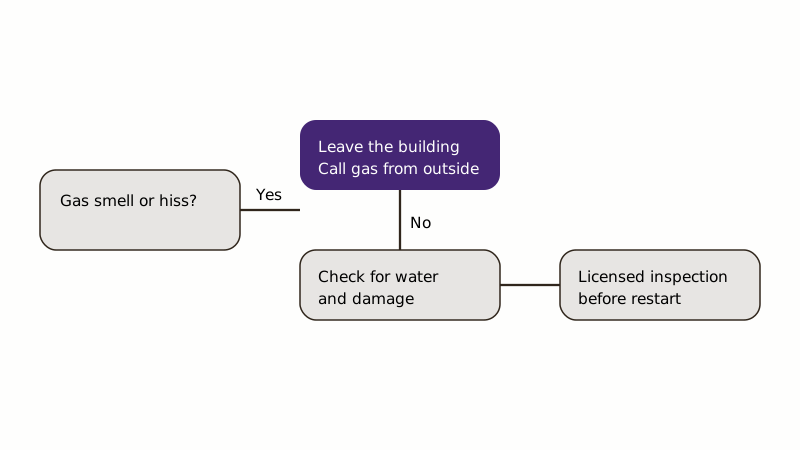
When a seismic valve trips, gas is off at that spot, and it should stay off until a qualified person has inspected the line. Per SoCalGas, only it or contractors it has approved operate the service shut-off valve, so call SoCalGas before service is restored, since relighting a whole house is not a DIY task.
Photographs of the damage help an insurance claim, and so does a note of when you shut the gas.
What does installation cost?
No honest number is printed here, since no source we trust covers this exact job locally, and a rough range would be a guess. Price depends on valve type, meter access, pipe condition and permit fees. Only the figure on a written quote is real.
You can compare quotes fairly if you have every contractor price an identical scope: the valve model, the labor, any pipe adjustment, the permit and the post-install leak test. Include a second quote, since a gas line install and a valve swap are different line items.
For general gas pricing, see gas line cost. To start, open the quote page.
Common questions
What is a realistic time allowance?
Nobody can fix a time in advance. A simple meter-side install is often brief, but permit and inspection can spread the whole process over days, and pipe repairs, cramped access or appliance relighting add more. After seeing the meter and lines, the contractor should give you an estimate in writing.
What should the first call to an installer cover?
Request the contractor license number, a quote that names the valve model, and a clear answer on who handles the permit, how leaks are tested and who relights your appliances. Learn whether the trip charge is deducted on a yes. An installer unwilling to write it all down is not the one.
Is it necessary to stay home?
Someone grown-up should stay, because gas goes off inside the house and the appliances get relit afterward. Your part is pointing to the meter and each gas appliance, approving the scope and watching the final test. Mention locked gates, dogs and any appliance that has been temperamental.
Is a manual shutoff wrench enough?
A wrench helps only when someone is home, awake and knows where the valve is, which is not a given in a quake. An automatic valve acts without anyone. Even if you fit one, keep the wrench handy and know the meter location. Our gas line guide covers the basics.