Will my policy pay when a pipe breaks under the slab?
Possibly some of it. A lot of homeowner policies separate the harm the water did from the bill for mending the busted pipe. The first may be paid if the break was abrupt and unintended, whereas the repair of the pipe and the concrete work required to reach it often face exclusions or caps. Your declarations page and endorsements decide.
Nobody here sells insurance, so what your policy pays is not ours to say. Instead, this page lists what adjusters tend to ask, so the phone call goes better. Still hunting for the leak? The Chaffey Pipe and Drain home page describes how finding and fixing one gets arranged.
Read three things in your policy: the water damage section, the exclusions, and any endorsement for service lines or water backup. Then phone your agent or insurer and ask in plain words, in writing if possible.
Which words in a policy usually decide a pipe claim?
Scan for phrases such as "sudden and accidental," "continuous or repeated seepage," "wear and tear" and "corrosion," plus anything naming the foundation. Policies commonly cover abrupt breaks but exclude leaks that seeped over a long time or that came from deterioration. How the insurer classifies your leak, abrupt versus gradual, often drives the outcome.
A pinhole in aging copper that seeped for months looks gradual. A pipe that snapped overnight looks sudden. Real cases land in between, which is why documentation matters. Some policies also list the foundation or slab separately, and some exclude damage from settling or earth movement. Slabs and soil sit in murky territory. Put this question to the insurer outright: does foundation or slab repair caused by a plumbing leak count under the water damage section?
Tear-out is its own phrase. Certain policies pay for cutting into a wall or floor to get at the leaking pipe; others limit the amount. Find out which camp yours falls in.
What is the usual split between the pipe, getting at it, and the damage?
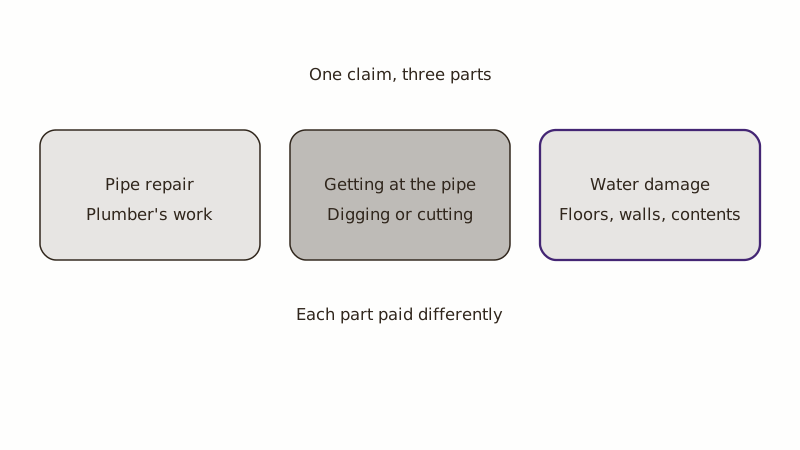
Sort the loss into three piles: the repair, the excavation needed to reach it, and the wreckage the water left behind. Insurers often treat the piles separately. Soaked flooring, drywall and belongings sit in the last pile, the likeliest to be paid when the cause qualifies, while the first two draw the most argument.
Beyond coverage, the price of each bucket is worth knowing. For dollar ranges on detection, access and repair, read the slab leak cost guide; leak detection pricing covers pinpointing the break. Have the plumber put a separate price on each pile; an itemized bill is easier for an adjuster to read.
Related reading: burst pipe insurance questions and insurance for slab leak repair.
Which step first after I find a leak?
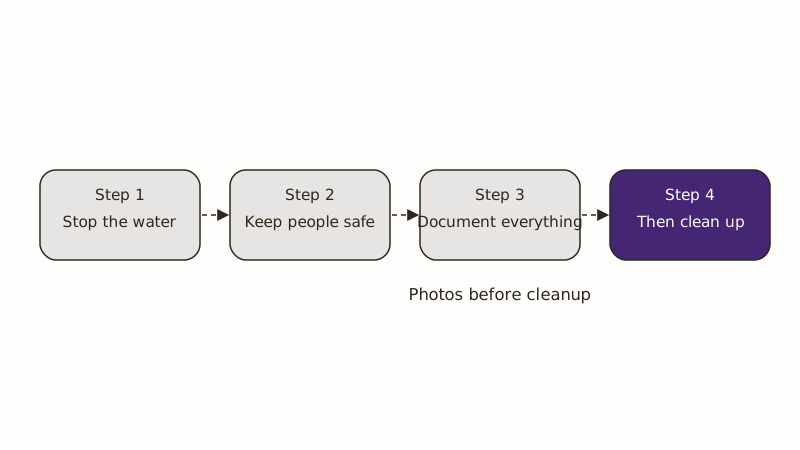
Stop the water, protect people and property, and document everything before cleaning up. Turn the main valve closed, shut off breakers for wet areas at the panel (never standing in water), clear belongings, and photograph or video every damaged surface. Then tell your insurer soon; most policies expect the owner to hold the damage down.
One safety note: any smell of gas, or a possible gas line, means heading outdoors and reporting it to the gas company at 1-800-427-2200, or to 911 when anyone could be harmed.
Hold onto ruined materials until the insurer has looked at them or released you from that. Keep the plumber's written findings, the date you first noticed the signs, and any bills. Insurers often ask when the leak began, and a record of the water bill history can help show whether it was sudden. Pull the last year of statements.
Beyond the claim, each week of delay adds damage and cost; the EPA lists leaks among the leading sources of wasted household water.
How can a plumber's report help a claim?
A written report from the plumber who found the leak can describe where the pipe failed, what material and age it was, how the leak was located, and what repair is recommended. That wording gives the adjuster something concrete to evaluate, and it may separate the repair cost from the access and restoration costs.
Ask for a plain description of the cause: corrosion, a failed joint, an abrasion against concrete, a manufacturing defect, or something else. Do not ask the plumber to word it in a way that favors a claim; accuracy is the point, and an inaccurate report can sink one. Keep photos of the failed section and, if possible, the section itself.
A report does not ensure payment. Insurers make their own call, and an adjuster may send their own inspector. Cooperate and keep copies of everything.
Does maintenance affect coverage?
It can. Policies commonly expect the owner to maintain the home and to act promptly on known problems. A leak you ignored for months, or a pipe known to be failing, may be treated as a maintenance issue instead of a sudden loss. Keeping records of inspections, repairs and meter readings supports your side.
Cheap habits help: check the meter when nothing is running, watch for warm spots on the floor or a bill that jumps, and look at the old plumbing in the house. Houses near downtown Ontario and Euclid Avenue may carry aging copper or galvanized lines, while newer homes in Ontario Ranch and Eastvale usually have plastic. Age is not a verdict, but it affects how insurers see a loss.
When comparing policies, look at water backup and service line add-ons, deductibles and limits on leak detection. Compare the actual wording, not the brochure. Customer reviews of an insurer's claims handling are worth reading from independent sources, since we do not publish reviews here.
Who should I call first, the insurer or a plumber?
Call the plumber to stop the loss and find the cause, and call your insurer promptly so the claim is on record. Emergency steps to prevent further damage are generally expected, and most insurers want to hear from you before major repairs. Ask the insurer what they need before large work starts.
Our side arranges a local plumber to trace the leak. Request the findings and a quote on paper, and enter the contractor's license number on the state board website; slab work often involves a permit, and permit jobs need a contractor license in California. You can phone us weekdays between nine and five. The quote page is the entry point. Only a written quote after an on-site inspection sets a real price.
Common questions
Does the policy pay to pinpoint the leak?
A few policies reimburse the search for a covered leak; many do not. It depends on the wording. Ask whether detection is covered and whether approval is needed before the plumber begins. Keep the detection report, because it also documents the cause.
Will a claim raise my premium or cancel the policy?
Renewal and pricing can be affected, depending on the insurer, your claim history and how large the loss was. Some owners absorb small repairs to avoid filing. Ask your agent about the effect before you file, and keep in mind that you can have the conversation before making a claim.
What if my insurer denies the claim?
Request the denial on paper, quoting the policy language used. Ask for a second look with the plumber's report and photos attached, and keep in mind the state insurance department takes consumer complaints. Keep a timeline of every contact. A public adjuster or attorney is a decision for you.
Does a home warranty plan cover slab leaks?
Often not, and when they do, exclusions and limits are common. Plans differ widely, so read the contract for words like slab, foundation, underground and pre-existing before relying on one. Also learn the service call fee and the per-claim cap.
Can I fix the pipe first and claim later?
Be careful. Stopping the leak is expected, but permanent repairs before the insurer inspects can complicate a claim. Call early, document everything, and ask what they need. If water is actively causing damage, take the protective steps and keep evidence.